Observe the window
A bright windowsill does not offer identical conditions all day or throughout the year. Watch when sunshine actually reaches the surface and how long it stays. A window sheltered by a balcony or tree may receive much less direct sun than it appears to. Also note nearby radiators and draughts when the window opens.
Then choose species whose needs match those conditions, consulting their specific care information. Do not assume all small plants enjoy the same position. If pets or young children live with you, check the risks associated with each species separately and keep unsuitable plants out of reach. An indoor-plant label does not answer that question.
Keep the window usable
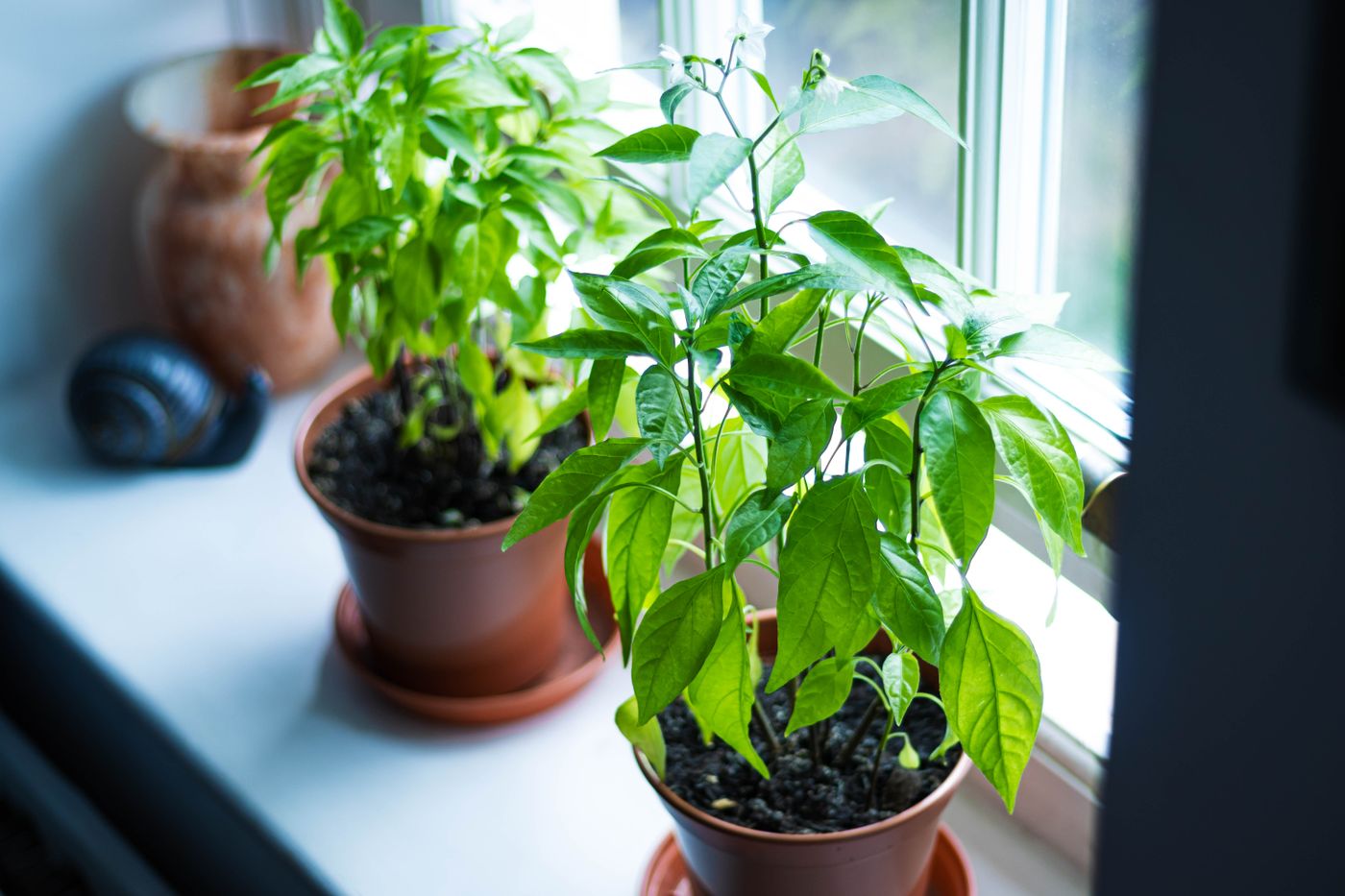
Open the window fully before deciding where pots should stand. Leave room to clean the glass and reach the handle. Containers should sit completely on the ledge rather than projecting above a walking route. A tightly packed row makes watering difficult and can press leaves against glass that becomes hot or cold.
Use an appropriate waterproof protector under each pot while respecting the plant's drainage requirements. A decorative outer pot is not a reason to leave standing water around roots. Check the bottom after watering and empty excess water where the species' care instructions require it. Take particular care with wooden surfaces, which can develop marks before the damage becomes obvious.
Check the available depth for future foliage, not just the diameter of the pot you bought. A small plant can eventually occupy the handle area or touch a curtain. Leave a margin and learn about its usual growth. If it will later need a larger position, plan that before treating the sill as a permanent home. Growth room is part of choosing the plant, not a problem to solve only when opening the window becomes difficult.
Curtains and blinds also change the light actually received. Closing them every afternoon creates different conditions from a photograph taken in the morning. Note household habits, including during absences. This prevents choosing a species for a theoretical exposure that your window provides for only a small part of the day. Check the care information against the real routine rather than against the compass direction alone.
Adjust before adding more
Begin with one or two plants. You can learn their routine and see how the window behaves before filling its full length. Inspect new arrivals and watch changes in their leaves without treating one symptom as a certain diagnosis. The species' requirements and the actual conditions should guide your adjustments.
Turn or move a pot only if that suits the plant and improves its position. If you have to remove the entire collection to open the window every morning, reduce it or move some plants to a stable neighbouring surface. A usable window and a few well-chosen plants often offer more than a completely occupied ledge. Leave enough space to lift each container safely when it needs attention.