Make everyday use fit
Measure the balcony with its door fully open. The remaining space should let you step outside, sit down and return indoors without moving every piece of furniture each morning. Two folding chairs may suit it better than a deep lounge set. Before buying, reproduce a proposed tabletop with cardboard: dimensions on a product page often feel smaller than the actual furniture once installed.
Follow your building's rules and the balcony's usage limits. Do not attach a table to a railing without checking that the product is designed for that use and compatible with the support. A small freestanding table avoids this issue. Keep heavy objects and anything that could fall away from the edge, and never turn furniture into steps beside the guardrail.
One tray instead of six trips
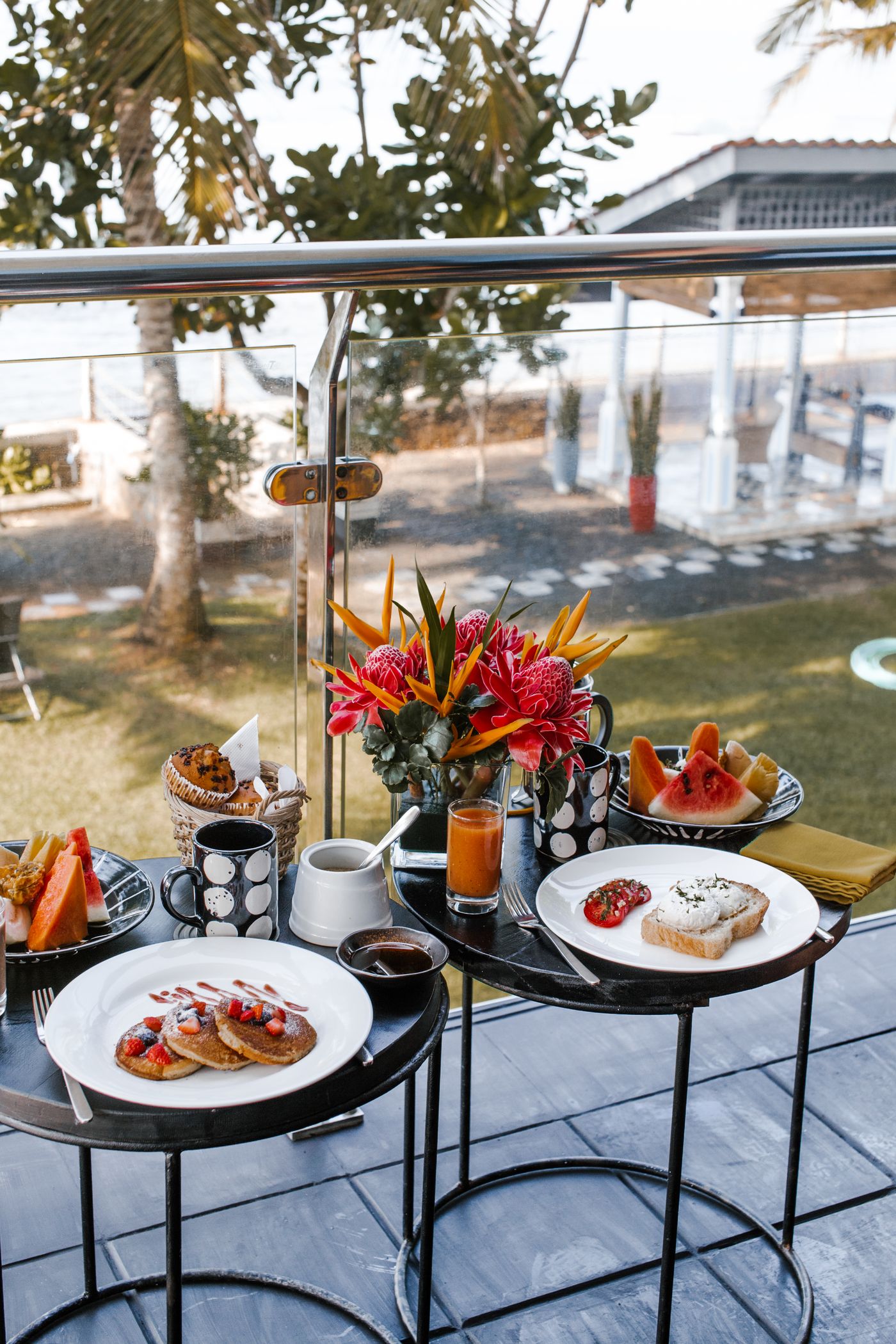
Prepare what you will carry while still indoors: bowls, cutlery, bread and drinks in stable containers. A tray with raised edges helps, but avoid overloading it. Put it down before serving hot liquids. If space is extremely tight, a cold breakfast may be easier than a full arrangement of teapot, coffee pot and several plates.
Watch the sun at the time you actually eat. A pleasant evening seat might be dazzling in the morning. Do not immediately add a large parasol: check its footprint, stability and stated conditions of use first. Bring lightweight accessories inside when the wind rises. A fabric napkin secured beneath a plate is less likely to blow away than a stack of paper ones.
To test the arrangement for two, walk the route with an empty tray while the other person is already seated. Can they stand without pushing your chair towards the railing? Where can the tray wait if the table is occupied? This trial reveals difficulties measurements alone miss. A slightly smaller table may ultimately make eating much easier than a larger surface with no room around it.
On a narrow balcony, one person might sit at each short end of a slim table, provided an adequate route remains. Do not choose this layout solely from a photograph: check the door and actual movement. Some balconies are simply too narrow for two people to eat comfortably. Using the space for a solo coffee may suit it better than forcing a full dining arrangement into the available width.
Put things away for next time
Give cushions and the tray an indoor storage spot. Leaving textiles outside when they are not intended for outdoor use quickly creates extra work after rain. Wipe the table and collect crumbs after breakfast, particularly from gaps in the floor. Plant pots should not become a default destination for leftover coffee or food.
If you usually eat alone, there is no need to keep a second chair unfolded permanently. Fold it away and enjoy the extra room to move. The most useful arrangement supports a spontaneous ten-minute breakfast, not only a carefully prepared Sunday brunch. Try it for several ordinary mornings before deciding whether another accessory would genuinely improve the space.