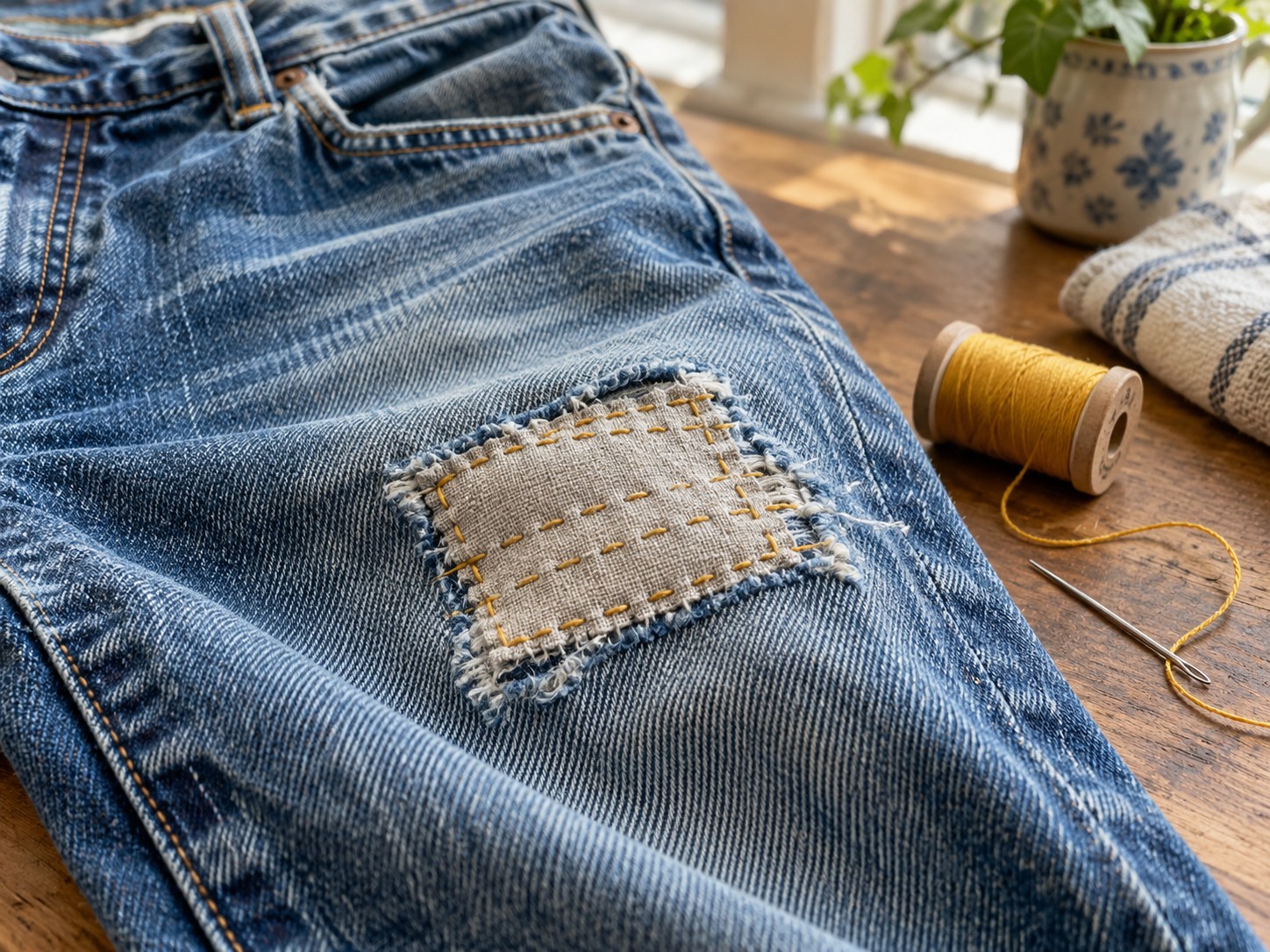
Assess before sewing
A small hole in stable fabric is a better first project than a large tear in stretchy or very fine material. Examine the area around the hole too: if the whole patch is worn, a tiny repair will not distribute the strain adequately. Seek appropriate advice before experimenting on a valuable or technical garment.
Choose a scrap compatible with the garment's weight and care needs. A stiff patch on soft cloth can pull and feel uncomfortable. Wash and dry the scrap where appropriate to reduce different behaviour in later washes. The repair must withstand the same use as the garment rather than merely look attractive lying flat.
Leave sound fabric around the damage
Cut a patch that extends far enough beyond the damaged area to be stitched into sound fabric. Rounded corners may resist lifting, although the shape depends on your design. Put the patch on top for an openly visible repair or underneath if you prefer the stitches to be the main feature. Try the garment or check its flexibility to confirm the position.
Hold the patch with an appropriate method, such as a few temporary tacking stitches, rather than struggling to retain it with one hand while sewing. Use and store pins carefully. Arrange good lighting and select a suitable needle that passes through both fabrics without excessive force. A thimble may help if you know how to use it.
Try the stitch on two scraps
Before sewing the garment, layer two comparable scraps and make a short line of stitches. Bend the result as it will bend during wear. If the fabrics pucker or the thread breaks under gentle movement, adjust tension, thread or fabric choice. This trial cannot simulate all future wear, but it reveals obvious incompatibilities without adding holes to the garment. Keep the trial nearby as a reference for the spacing you selected.
Raw edges on some woven fabrics fray. You might allow a turned edge if the thickness permits, or choose another finish appropriate to the fabric. Do not assume a decorative stitch far from the edge will always stop threads escaping. Deliberate fraying can be an aesthetic choice, but the patch must retain a securely stitched allowance around the damaged area. Inspect this allowance rather than judging only the visible central pattern.
When repairing a pocket or sleeve, check that you are not accidentally stitching both garment layers together. Carefully identify the opening and work on one face at a time. Keep your hand out of the needle's route before each pass. This simple check prevents finishing an attractive patch that closes a pocket or blocks an arm, and avoids unnecessary unpicking in an already weakened area. Stop periodically to confirm the garment still opens and moves as intended.
Sew without puckering
Begin with simple, reasonably even stitches around the patch. Thread should hold the layers together without gathering the surface. Make a few stitches, lay the garment flat and check tension. Correcting a short section is easier than discovering a tightly gathered edge at the end.
Depending on wear and design, additional lines may stabilise the area, but avoid densely perforating fragile fabric. Spread the load into sound material. Secure the thread firmly and discreetly on the reverse without leaving a bulky knot against the skin. Remove temporary stitches and check that no needle remains in the garment.
Wear the repaired item briefly to notice pulling or scratching. Adjust it before returning it to regular use. Follow care compatible with every material and inspect the repair after its first wash. A loose stitch is easier to fix when noticed early.
Visible mending acknowledges a repair without requiring a complicated motif. A contrasting thread and clear shape are enough. Keep a small matching scrap and the thread if you may extend the repair later. This first project mainly teaches you to observe fabric and tension, which matter more than perfect regularity in every stitch. Photograph the result if you want to compare it with your next attempt, but judge it first by how the garment feels and holds together.