Begin with fully dried flowers
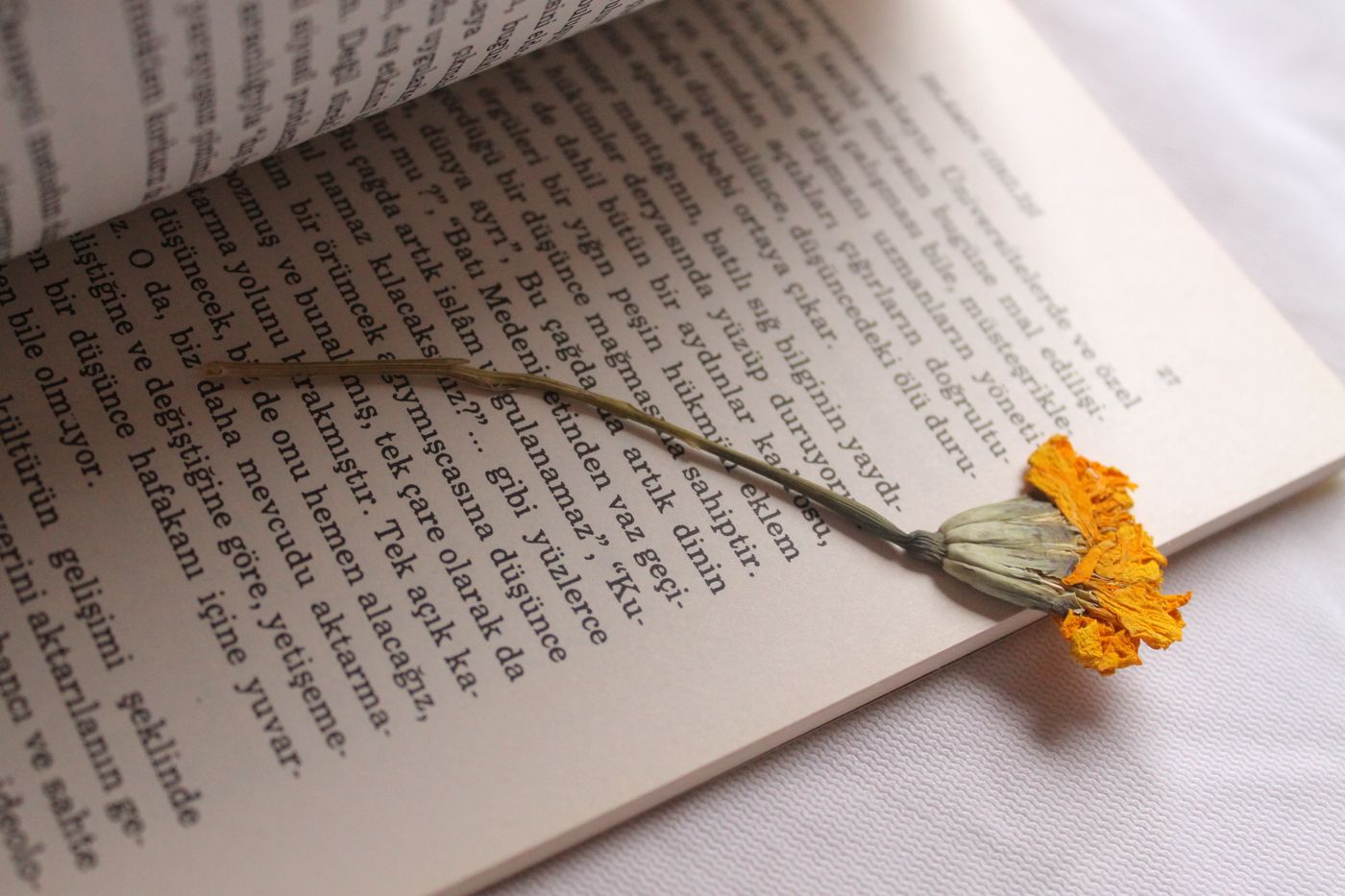
Choose small flat flowers or leaves collected with permission, without taking protected species. Avoid unknown or irritating plants. For a first bookmark, already pressed and completely dry material makes the result more predictable. A damp flower can stain paper and deteriorate once enclosed.
If pressing plants yourself, put them between suitable absorbent sheets under even pressure in a dry place. Use a working support rather than a valued book, because moisture and pigments can transfer. The time required varies with thickness and conditions. Check that the plants are dry instead of relying on a single fixed duration. Keep the selected pieces flat until you are ready to use them.
Arrange before gluing
Cut a rectangle of reasonably firm but not thick paper. It should slide into a book without straining the binding. Arrange two or three pieces on it, leaving the edges clear. A long stem can lead the eye, whereas several large overlapping flowers mainly add thickness.
Photograph the arrangement if you might forget it, then lift each piece in turn. Apply a little adhesive suitable for paper and plant material, following its instructions. Test a scrap first to check for marks and how the glue looks when dry. Use tweezers only if they help you handle flowers without crushing them.
If a flower is very fragile, reduce handling by preparing the support, placement and adhesive before lifting it. A broken petal can become a separate small accent instead of being painstakingly restored. The bookmark does not need an entire flower to suggest its shape or colour. Try this choice on the unglued arrangement first so you can see whether it improves the balance rather than merely filling a gap.
For a gift, choose an envelope or presentation card that keeps the bookmark flat. Explain simply that it contains real dried plants and should stay away from moisture. If the recipient wants to use it in a valuable book, suggest testing its stability in a less delicate volume first. The gift can be decorative and useful without promising that its colours will remain unchanged indefinitely.
Leave the bookmark flat for the adhesive's recommended drying period. If adding a transparent protective layer, check its compatibility with the materials and whether it makes the bookmark too rigid. A thin sleeve intended for the purpose can be removed if necessary. Round off corners that might catch on pages.
Test the result in a less delicate book before using it in a treasured volume. No petals should detach or leave residue. You might write the place and season of collection on the back. This gives the bookmark a story without adding ribbons, beads and ornaments that interfere with its main job. Store spare bookmarks flat rather than beneath a heavy pile of miscellaneous objects.