An occasional desk for correspondence needs different equipment from a daily workstation. First decide what you will actually do in the corner: write, use a laptop, draw or organise documents. Arrange those objects on an existing table to measure the surface you need. A narrow top quickly becomes awkward when a notebook must stay open beside the computer.
Then check how far the chair needs to move. You should be able to sit down and stand up without shifting the bed or blocking a door. A table can fit perfectly into a corner while leaving too little space for its user. Measure the whole arrangement in use, with the chair pulled back and drawers open, rather than considering the desk alone.
Try the arrangement before equipping it
Where possible, test the chair and desktop height with the equipment you intend to use before buying. For long computer sessions, investigate a setup suited to your work instead of relying on a decorating photograph. A compact arrangement should not force you to hold your arms up or continually look towards a screen placed off to one side.
Light from the side is often easier to manage than a window immediately behind the screen or behind you. Watch for reflections at different times of day. Add a task lamp for paperwork if needed, paying attention to its cable route. Extension leads should not run through the area where the chair rolls.
Separate permanent equipment from portable supplies
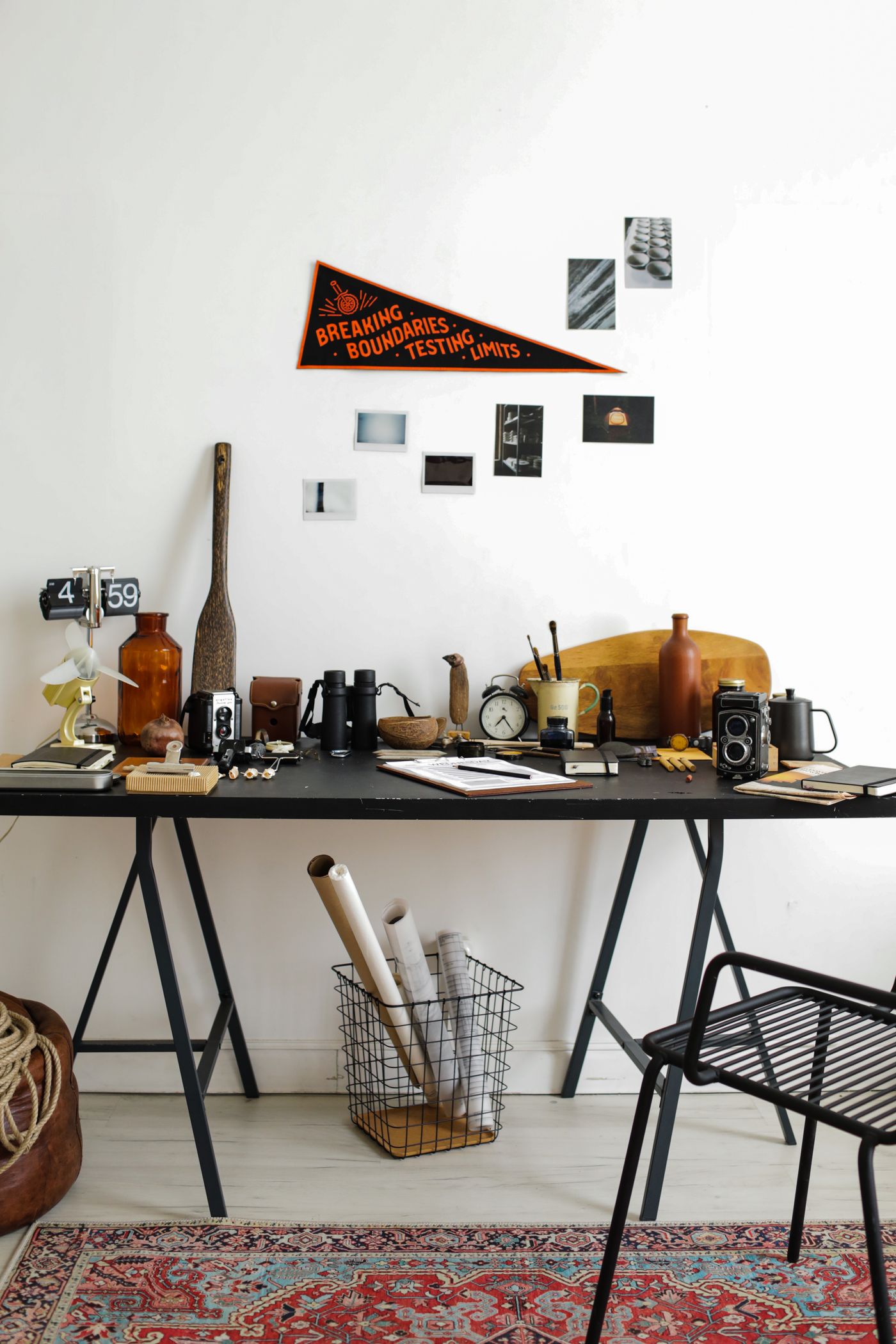
Make two groups before adding storage. The first contains equipment that stays connected or is used every session; the second contains occasional supplies. If you draw weekly but write every day, pencils can live in a case elsewhere while the notebook remains within reach. A monitor stand is worthwhile only if it suits the equipment and task, not simply because it creates another shelf.
Test the complete setup with the charger, a reference sheet and a drink placed away from devices. Where do cables go when the laptop is stored? Where will tomorrow's unfinished document wait? An upright folder or an existing drawer may answer the latter question without several additional accessories on the tabletop.
For a shared space, prepare a small box for each user rather than compartments everyone must continually rearrange. Identify shared tools and return personal items to their boxes at the end of a session. Make sure those boxes do not occupy the legroom you originally allowed. The desk needs to work while somebody is using it, not only when it has been emptied for a photograph.
Keep tools for the current task on the desktop and give spare supplies another home. A box of drawing materials can come out for a session and return to a cupboard afterwards. Active documents deserve a clearly identified folder; uncategorised piles quickly consume the available depth.
In a bedroom or living room, provide a way to end the session: close the notebook, put away the computer and push the chair back. This might take only a minute. There is no need to hide the entire desk behind a curtain if straightforward tidying is enough. After several days, remove accessories that interrupt your movements rather than buying another organiser for each one.