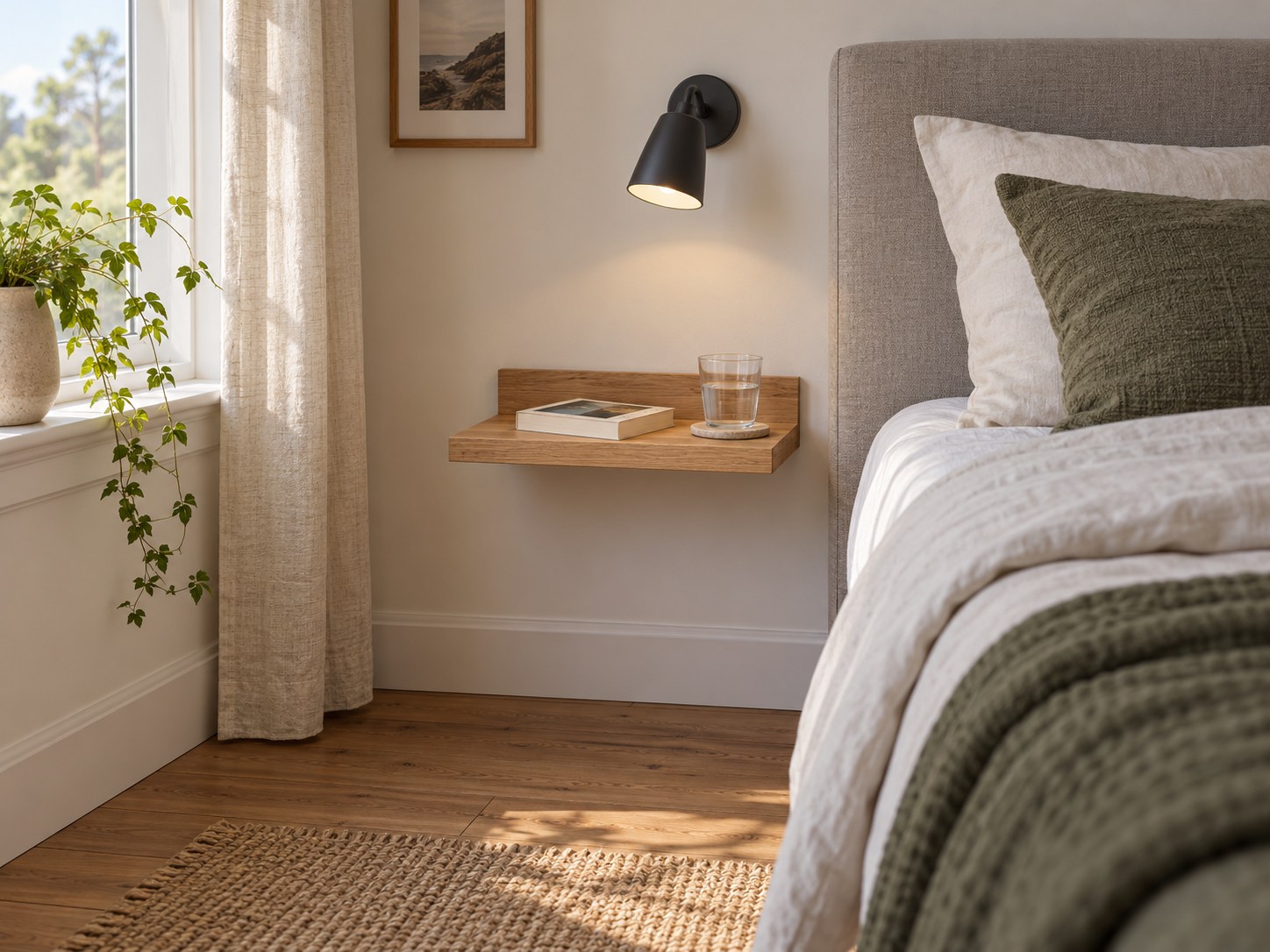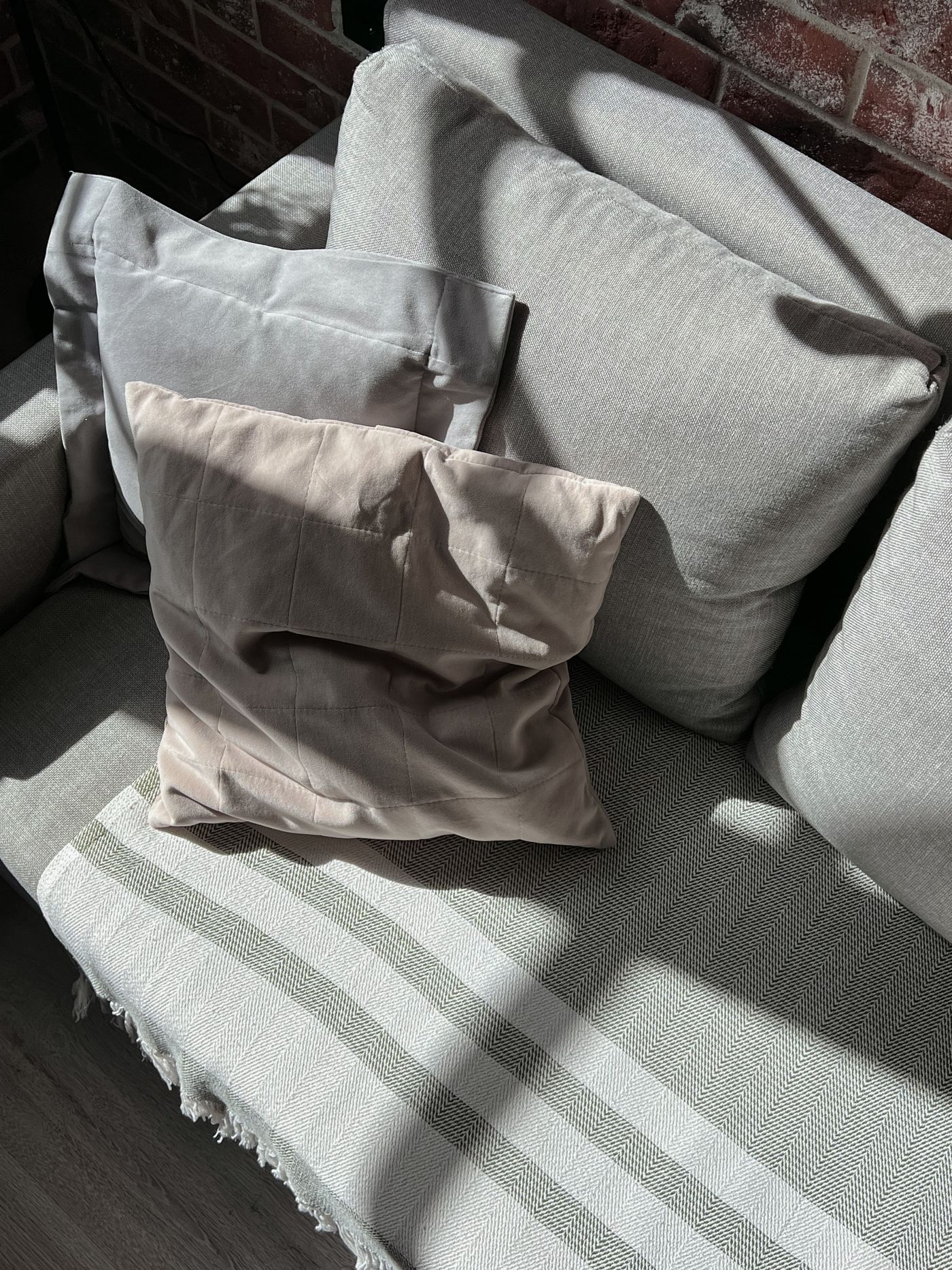
Look at what will remain in the room: the sofa, rug, curtains and large furniture. Choose a colour already present in one of these elements, even in a small amount. This becomes a starting point for cushions. A second colour can provide contrast, but you do not need a five-colour palette to dress a sofa.
Gather covers you already own before buying any. Turning over a patterned cushion may reveal a useful plain reverse. Put possible combinations on the sofa and look at them from across the room, then again in evening light. A shade that seems gentle on a screen can look much stronger against your existing upholstery.
Separate colour from pattern
If the rug and curtains already have noticeable designs, plain cushions provide a quieter area. You can retain variety through woven fabric, knit or velvet, provided their care needs suit everyday life. A delicate material may not be appropriate for a frequently used seat shared with children or animals.
To combine patterns, start with two different scales: one reasonably large design and a smaller, quieter one. A repeated colour connects them. If the arrangement feels busy, remove an element before adding another that is supposed to tie everything together. It is usually easier to identify what works when there are fewer pieces to judge.
A plain sofa makes the effect of a pattern easy to see, whereas flecked or printed upholstery already contributes several tones. Photograph the fabric close up to help compare colours in a shop, but remember that screens and lighting change their appearance. Where possible, examine a sample at home before selecting several covers. Judge it against the actual sofa rather than a distant memory of its colour.
You can work with intensity instead of introducing a new hue: one cushion lighter, another close to the sofa and a third slightly darker. This creates depth without a strong new colour. If you prefer a vivid accent, concentrate it in one piece at first. You can then see whether it draws attention where you intended, and whether the rest of the room still feels coherent in evening light.
Check comfort as well. Too many cushions end up on the floor as soon as anyone sits down. Leave enough actual seating space and choose sizes to suit the sofa's depth. A small decorative cushion does not always offer comfortable support, while a very large one may conceal the whole backrest.
Read care instructions for covers and fillings separately. A removable cover lets you wash or replace it without discarding the entire cushion, but not every fabric is machine washable. Store seasonal covers clean and dry. When you want a different mood later, change just one colour or texture and leave the rest in place. This makes it easier to see the effect of each change without buying a complete new set.