Let the vase set the scale
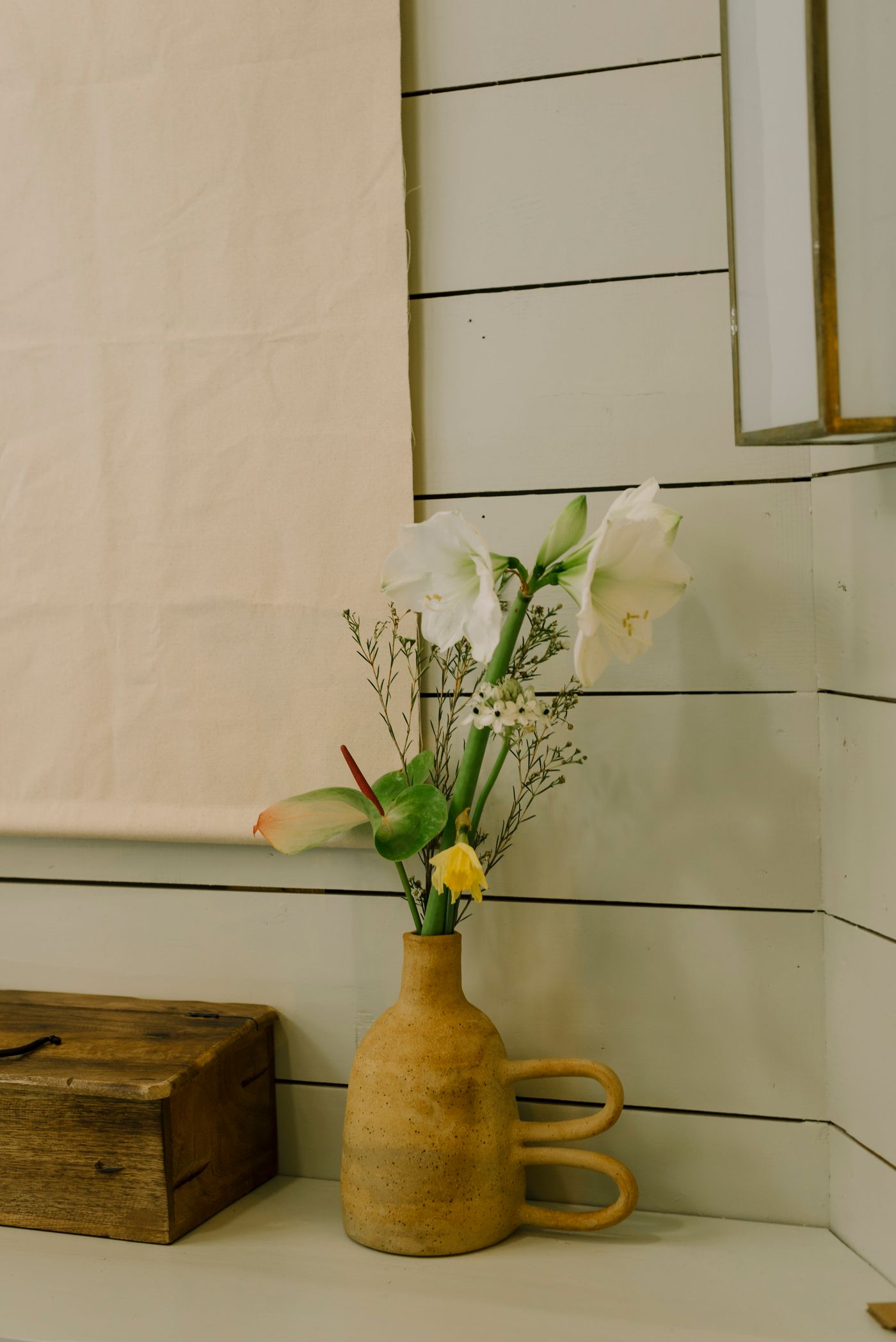
Begin with a clean, stable vase. Its opening determines how many stems you need to hold an arrangement together. A narrow neck supports a light composition with few flowers; a wide opening may require more material or a different approach. There is no reason to fill a large vase when you have only a handful of stems.
Choose flowers whose names and precautions you know, especially where children or pets could reach them. Some common species carry particular risks. Ask the florist for care advice suited to your varieties. Combining flowers solely because their colours match can complicate maintenance if their needs differ.
Prepare before arranging
Remove leaves that would sit underwater and prepare stems according to the variety's recommendations with a suitable clean tool. Protect the work surface and handle cutting tools carefully. For a beginner, a few related flowers with compatible foliage are easier to arrange than a very mixed bouquet.
Place the stems that establish width first, then add main flowers at slightly different heights. Turn the vase to inspect the whole arrangement if it will be viewed from several sides. Leave some spaces between flowers; a tightly packed composition conceals their individual shapes and the movement of the stems. Remove a stem if it obscures the feature you most wanted to show.
If every stem slips to one side, first check the relationship between their number and the vase opening. A narrower container may solve the problem without adding flowers. You can also shorten selected stems gradually, while respecting the variety's care recommendations. Cutting a large amount at once removes an adjustment option; make small corrections and look again from the final viewing position before cutting more.
For a desk arrangement, consider hand space and nearby papers. A widely spreading composition may look attractive on an empty table but become awkward during work. Put it in place for a few minutes with the usual objects before deciding it is finished. You should be able to move the vase for maintenance without also relocating a screen, a stack of documents and a lamp every time.
Look from the right height
Put the vase in its final position before adjusting it. At a dining table, sit down to check that flowers do not block people's view of each other. On a shelf, ensure it is stable and does not touch an appliance or fragile object. The bouquet should suit its location rather than force the room to work around it.
Follow care advice, change water and clean the container as often as the flowers require. Remove damaged material instead of letting the entire arrangement age at one pace. As stems shorten or their number reduces, move the survivors into a smaller vase. A bouquet can evolve without retaining its first-day shape.