Start with a place, not a piece of furniture
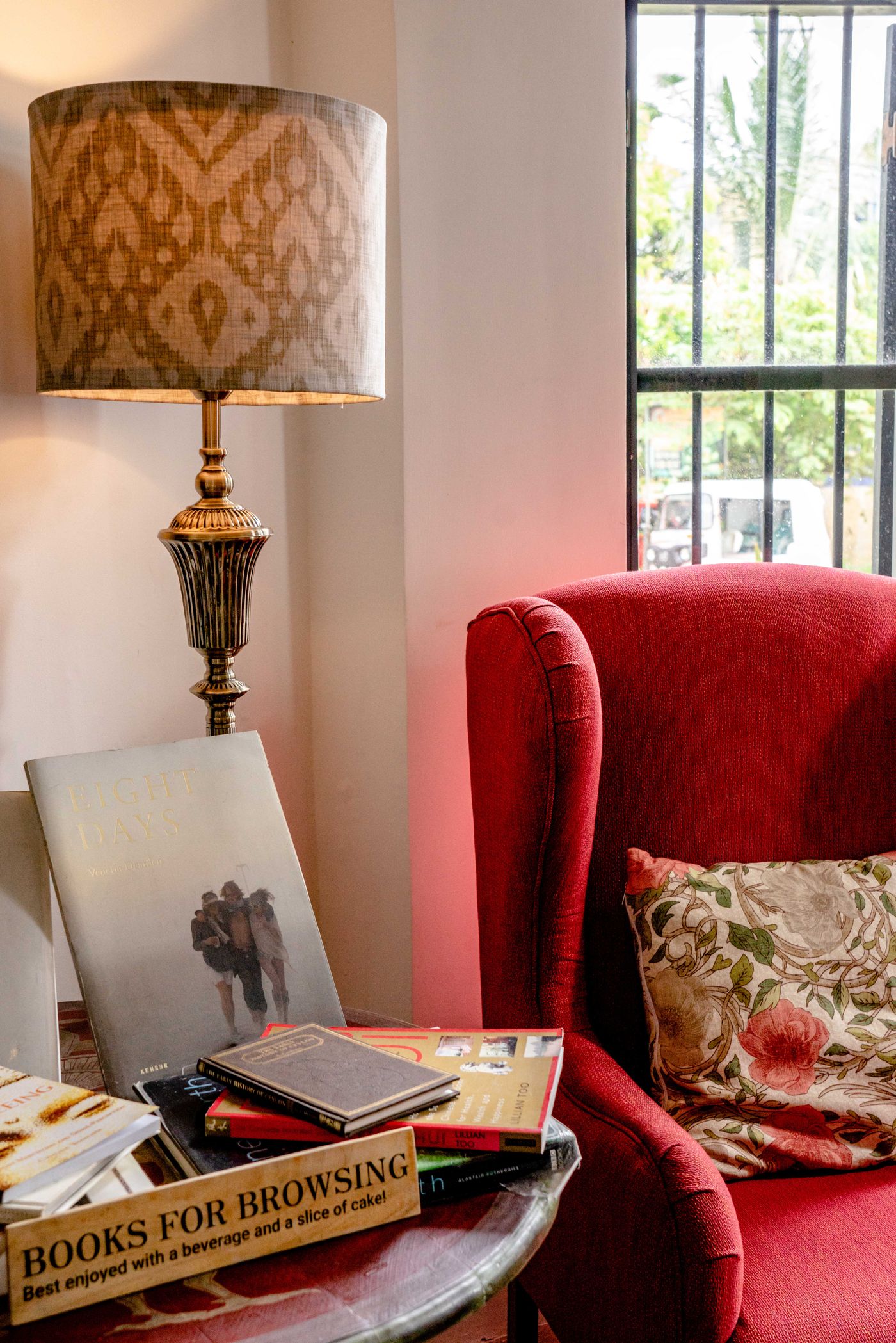
A reading corner can be one end of a sofa, a chair beside a window or the side of a bed. Before moving anything, sit in the proposed spot with a book for twenty minutes. Notice what is actually missing: support behind your back, gentler light or somewhere to put a cup? This small experiment produces a shorter, more useful shopping list than collecting photographs of decorated rooms.
Keep the route between the door and the main furniture clear. A beautiful chair that everyone has to squeeze behind will soon be moved. In a shared room, choose somewhere your lamp will not disturb someone watching a screen or going to bed earlier. The corner needs to work while the rest of the room is being used normally.
Adjust three kinds of comfort
Your feet need a stable resting place, and you should be able to hold the book without bending your head down for long stretches. An existing cushion may support your lower back; a folded blanket can shorten an overly deep seat. Try these adjustments before buying a footstool that will permanently occupy the floor. If you mostly read large illustrated books, a table may be more comfortable than a low armchair.
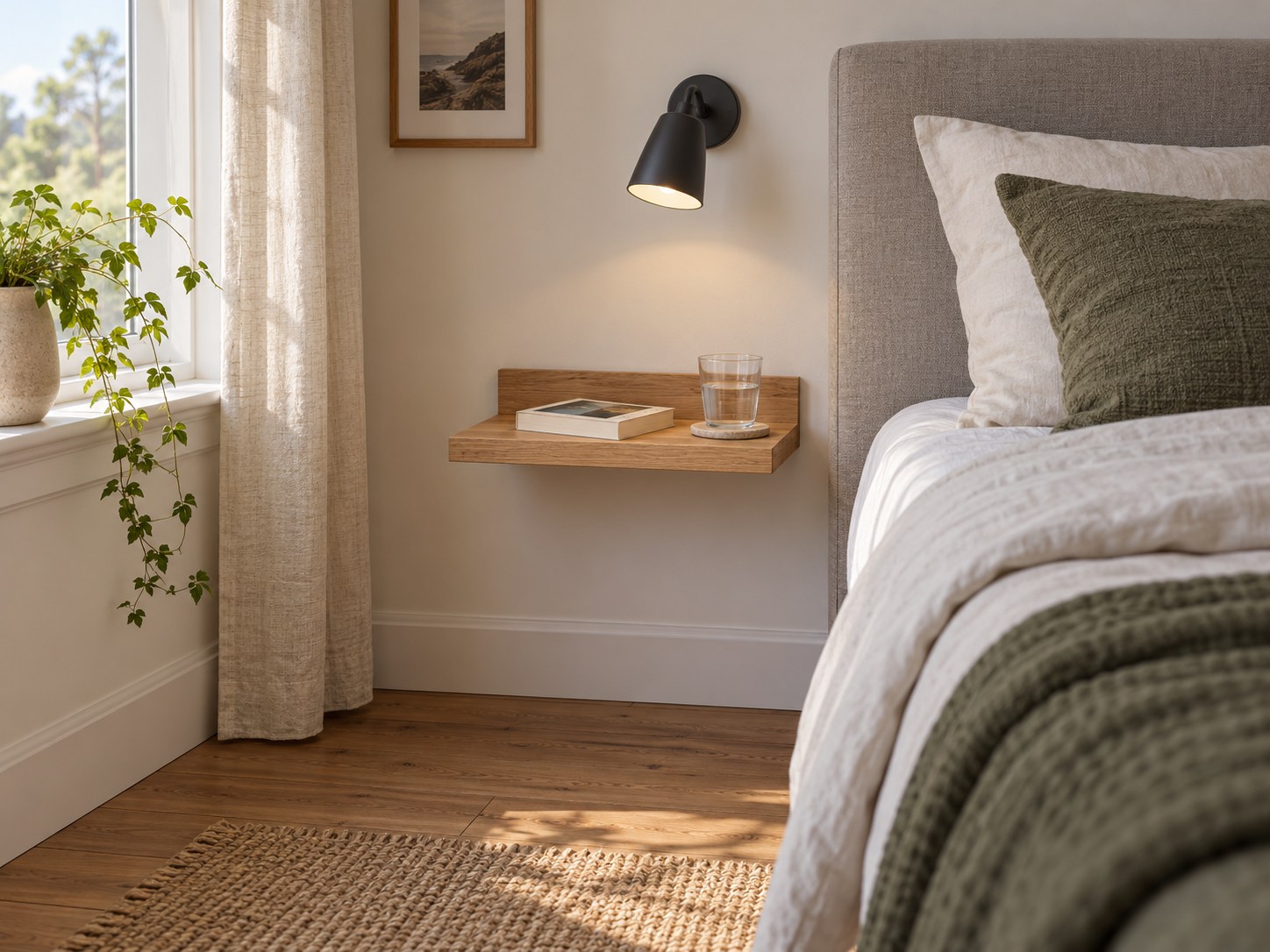
Position a lamp so that it lights the page without leaving the bulb directly in your line of sight. Test it after dark: daylight from a window cannot tell you how the arrangement will feel in the evening. Route its cable away from walking areas without trapping it beneath heavy furniture. Do not drape fabric over a shade to change the light colour; choose a bulb compatible with the fitting's instructions instead.
For the book itself, use the end of a table, a stable tray or an existing shelf. A stack of books is not a suitable stand for a hot drink. In a very tight space, the simplest arrangement may be to leave the cup on a nearby table and keep the seat exclusively for reading.
Keep only what belongs there
Leave one current book, a bookmark and perhaps a notebook within reach. A whole backlog of future reading quickly turns the free space into storage. If several people use the seat, collect these few objects in a basket that can be moved easily. The cushion can stay in position; the book does not need to occupy the seat all day.
After a week, check what you actually used. Bring a distant lamp closer and return an untouched blanket to the cupboard. If you still prefer reading somewhere else, do not force yourself to use the new arrangement. Move the useful elements to the place where you naturally settle. A successful reading corner depends more on this ease of use than on how closely it resembles a photograph.