Give tools a home
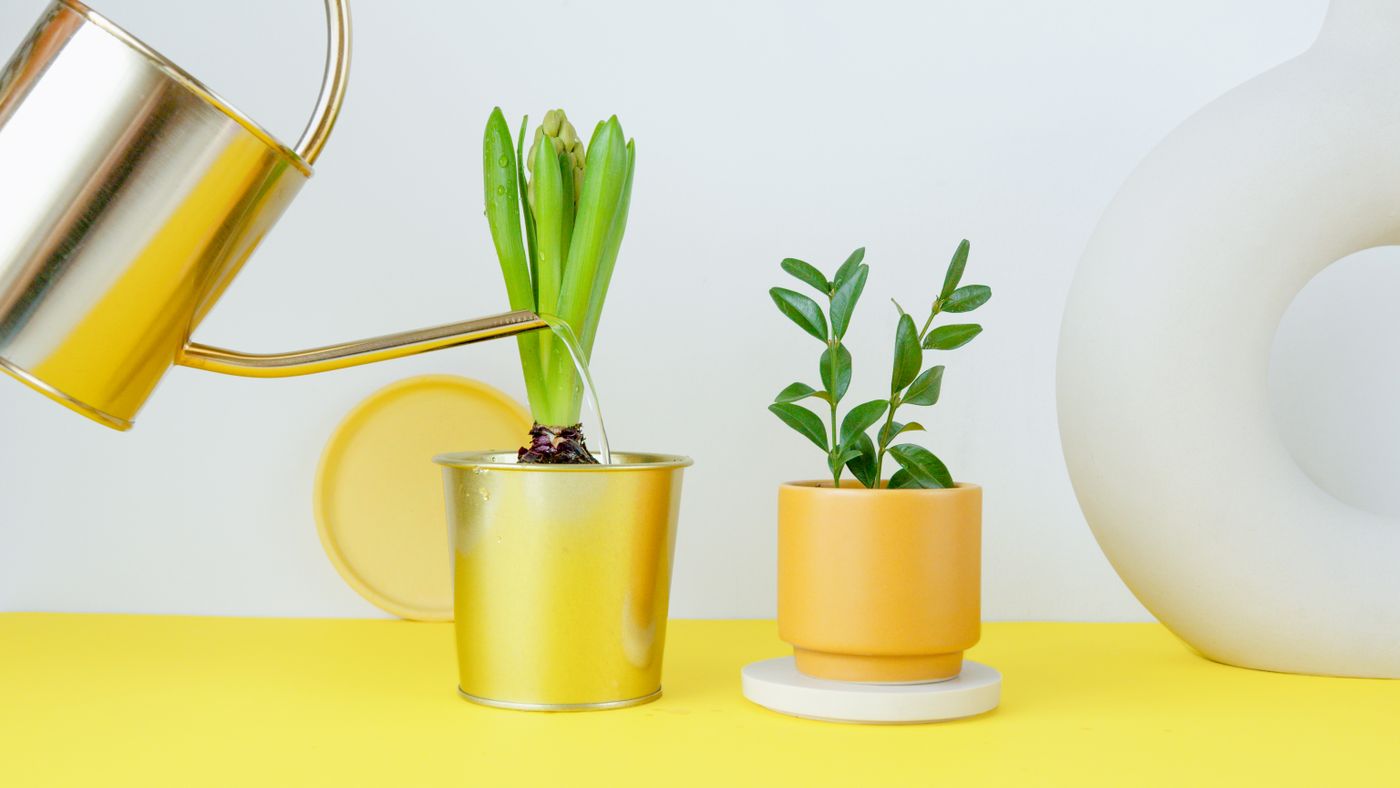
Group a watering can suited to your pots, a cloth and a protective tray if needed. The right capacity depends on the journey: a large full can becomes heavy and awkward among closely spaced leaves. Try pouring slowly with a little water before choosing one. A precise spout may be more useful than a large reservoir.
Store equipment clean and dry nearby without leaving it in a walking route. Plant-care products must stay in identified original packaging, following their instructions and out of reach of children or animals. Do not decant them into food bottles to make the shelf look coordinated. A watering station does not need a product for every possible plant problem.
Observe each pot
Two neighbouring plants can have different requirements. Consult guidance for each species and observe actual conditions before watering. Pot size, growing medium, light and season affect the interval. A weekly reminder can prompt you to check plants, but it should not require the same quantity of water for all of them.
Plan where water can drain without damaging furniture. Portable pots can visit a suitable area and drain according to the plant's needs. For heavier containers, protect the surface and check the outer pot afterwards. Do not leave standing water simply because it is hidden from view. A decorative container should not prevent you inspecting what is happening inside.
Arrange the route around awkward pots
Start with the movements that are actually necessary. A collection spread across several rooms does not automatically need one large carrying tray. A small can and cloth can travel while a protective tray stays beneath pots that are difficult to lift. Do not move a heavy container just to follow an arrangement that looked attractive on paper.
Try the route with the can only partly filled. Check that its spout clears shelves and that you can set it down before opening a door. A protective tray should be stable and large enough for the pot; inspect underneath it as moisture can collect out of sight. On valued furniture, check the surface regularly instead of assuming a saucer provides permanent protection without further attention.
Leave clear instructions when you are away
If someone will look after the plants during an absence, pair each name with a photograph of the entire pot. Similar plants in different containers are easy to confuse. Include the location, the plant-specific guidance you follow and how to check the outer container. A brief demonstration before leaving lets the person find the can, cloth and place where portable pots can drain.
Explain what should not be changed as well: moving a plant into a dark corner to gather every pot together, applying a product found in the cupboard or watering again solely because one leaf looks tired. When uncertain, a photograph and a question are better than an improvised treatment. On your return, ask what was done before resuming your usual observations. These notes communicate an existing routine; they do not promise identical results regardless of changing conditions. If you keep a simple record, leave space for the helper to note the date and what they observed, rather than asking them to tick a box that automatically means watering.
Record only what helps
If you forget differences between species, a short card beside the equipment can list their requirements and what to observe. Avoid rigid instructions such as one glass every Tuesday without considering the pot and conditions. A readable plant name is already useful for finding reliable information again.
Use the occasion to look at leaves and the undersides of containers. Separate and examine a plant showing an unusual problem instead of treating the whole collection at random. Wipe drips from surfaces, put the can away and keep the area accessible. Organisation makes observations easier; it does not replace attention to each individual plant. Update your notes when a plant moves to a different position.