Expose fewer objects
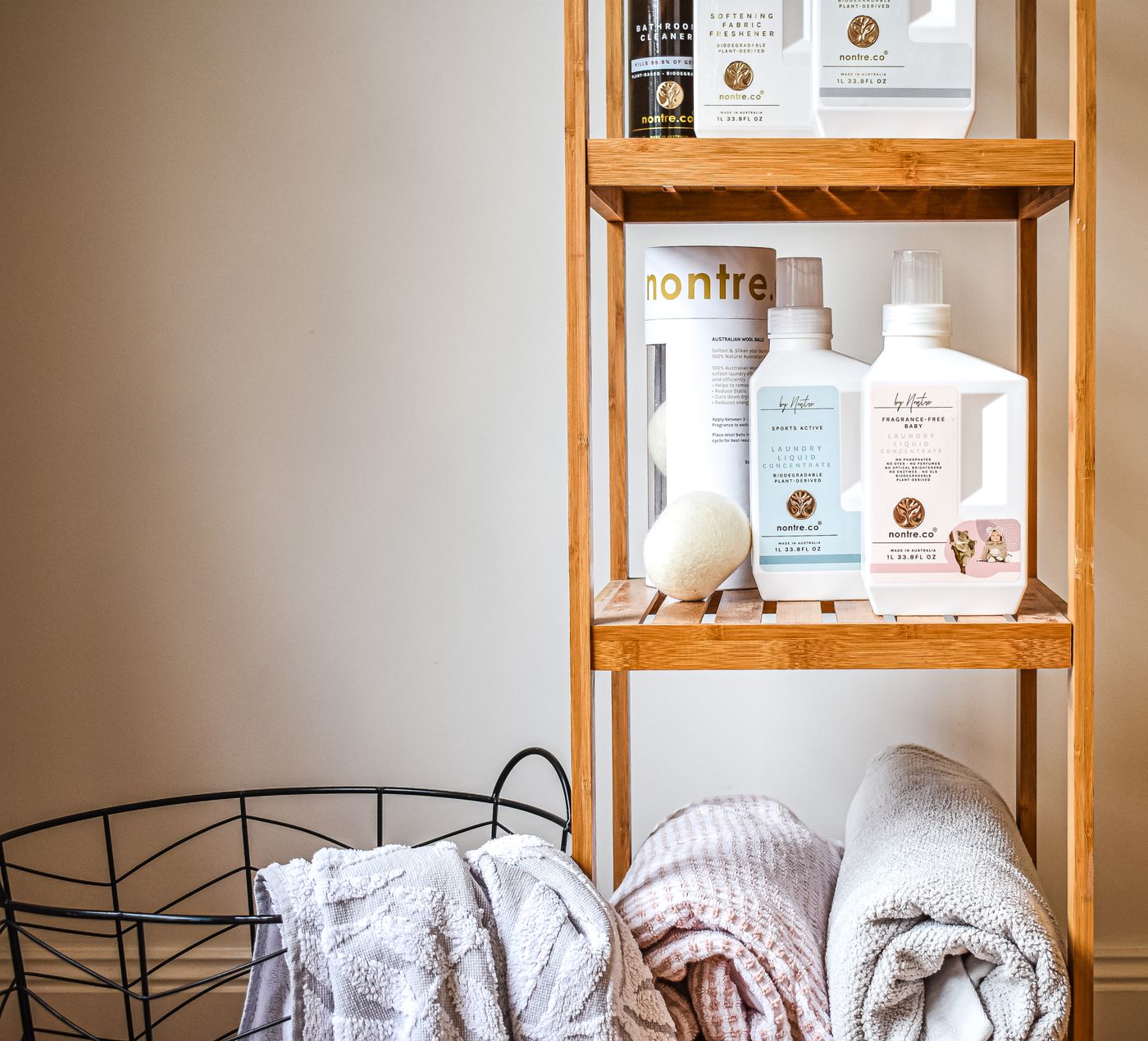
An open shelf can make daily routines easier, but it also exposes objects to splashes and dust. Start with products used every day. Refills and unopened packets can often stay in another suitable storage space. Something rarely used does not deserve the most accessible position simply because its bottle looks attractive.
Check storage recommendations on packaging. Not every product should be kept in a damp room or near heat. Medicines need a location chosen according to their instructions, out of children's reach, rather than a default place on a bathroom shelf. Consider who can access the shelf as well as how convenient it is for you.
Use containers with a purpose
A small washable tray groups two or three bottles and lets you lift them together for cleaning. Avoid decanting products into unidentified bottles just to make them match. You would lose directions, precautions and storage information. If you use a refillable dispenser, retain the necessary product details and follow its cleaning instructions.
Towels should fit completely on the shelf rather than hanging into a wet area. Do not compress damp laundry inside a closed basket. For small accessories, a ventilated or easily wiped container may work better than a cardboard box. Keep personal items separate where several people share the bathroom, and avoid making one person move everyone else's belongings to reach their own.
Group products by action rather than size if that makes use easier. Items used together can share a tray, while a large rarely opened bottle can live elsewhere. Arranging everything from smallest to largest looks orderly but may not be the clearest system when several people are finding their belongings in the morning. Test the arrangement with actual routines rather than judging it only from the doorway.
Plan what happens when a product runs out. Keeping almost-empty bottles at the front complicates cleaning and conceals current products. Finish what can be used according to its instructions before opening a duplicate, then sort the packaging appropriately. A small identified reserve prevents buying a third bottle because the first two were hidden behind towels. Do not combine products simply to reduce the bottle count.
Clean without dismantling everything
Leave enough room to wipe the surface and around its supports. If every cleaning session requires removing twenty objects, the shelf is probably too full. Decorative pieces can live elsewhere; resistance to moisture and ease of access matter more in this spot.
Once a month, check almost-empty packaging, duplicates and items whose purpose you no longer remember. Do not mix leftover products to save room. Follow local disposal or recycling guidance. Afterwards, replace daily products in the order you use them. This small adjustment is often more useful than another matching basket, and it makes obvious when a genuinely necessary item is running low.