Choose the return as carefully as the view
Pick a familiar, accessible place with a return route you know. A beautiful viewpoint at the end of a difficult path may become unsuitable as daylight fades. Check sunset time, the forecast and any park or garden closing hours. A listed time does not guarantee a colourful sky or good visibility until the final minute.
Aim to arrive before sunset rather than rushing to reach the viewpoint. You can watch the light change and leave before complete darkness. If the route is unlit, choose a simpler alternative or bring equipment appropriate to the conditions instead of depending solely on a phone screen. Knowing the path in daylight does not remove every difficulty after dark.
Look beyond the horizon
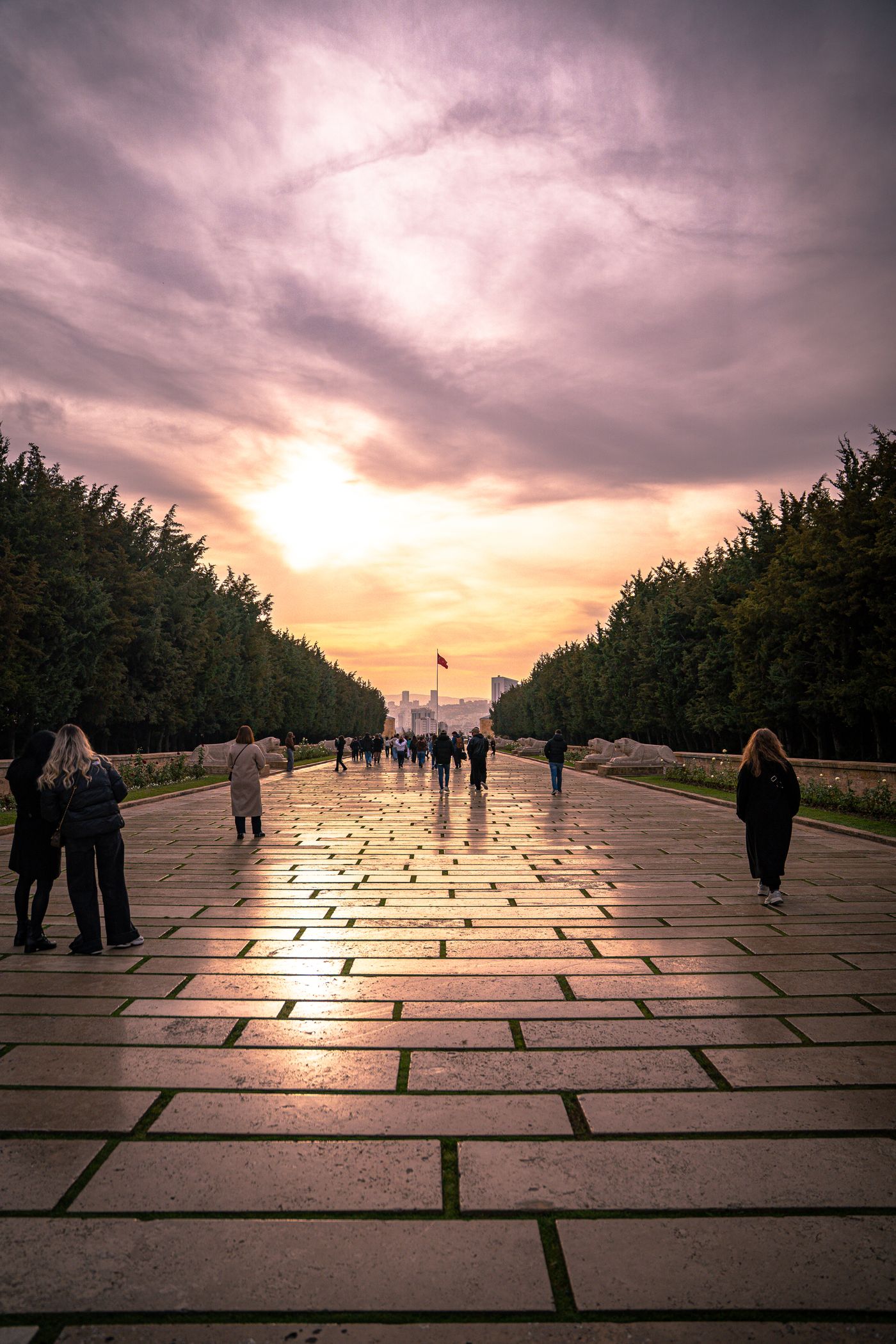
The sun itself is not the only subject. Notice lengthening shadows, buildings illuminated on one side and changing cloud colours. Do not stare directly at the sun or use optical equipment to look at it. A photograph can include the sky without putting the sun in the middle.
Take a few pictures from a stable, permitted position, then put the camera away. Lowering exposure slightly on a phone may preserve detail in a bright sky, but avoid spending the entire walk adjusting settings. Colours on the screen will not exactly match those perceived by your eyes, and an attractive photograph is not a requirement for enjoying the outing.
Leave while the return remains comfortable
Bring an extra layer if the temperature is expected to fall, and water appropriate to the duration. In a group, agree clearly when to leave so nobody continues alone towards another viewpoint. With children, a short outing near home avoids ending the evening with a tiring journey.
If the sky stays grey, look at silhouettes or lights appearing in windows rather than treating the walk as a failure. Keep the same return plan. Afterwards, note where the view was open and which timing worked. That is enough to prepare another visit without making every sunset into an event that must produce a spectacular result.