Make a page for looking
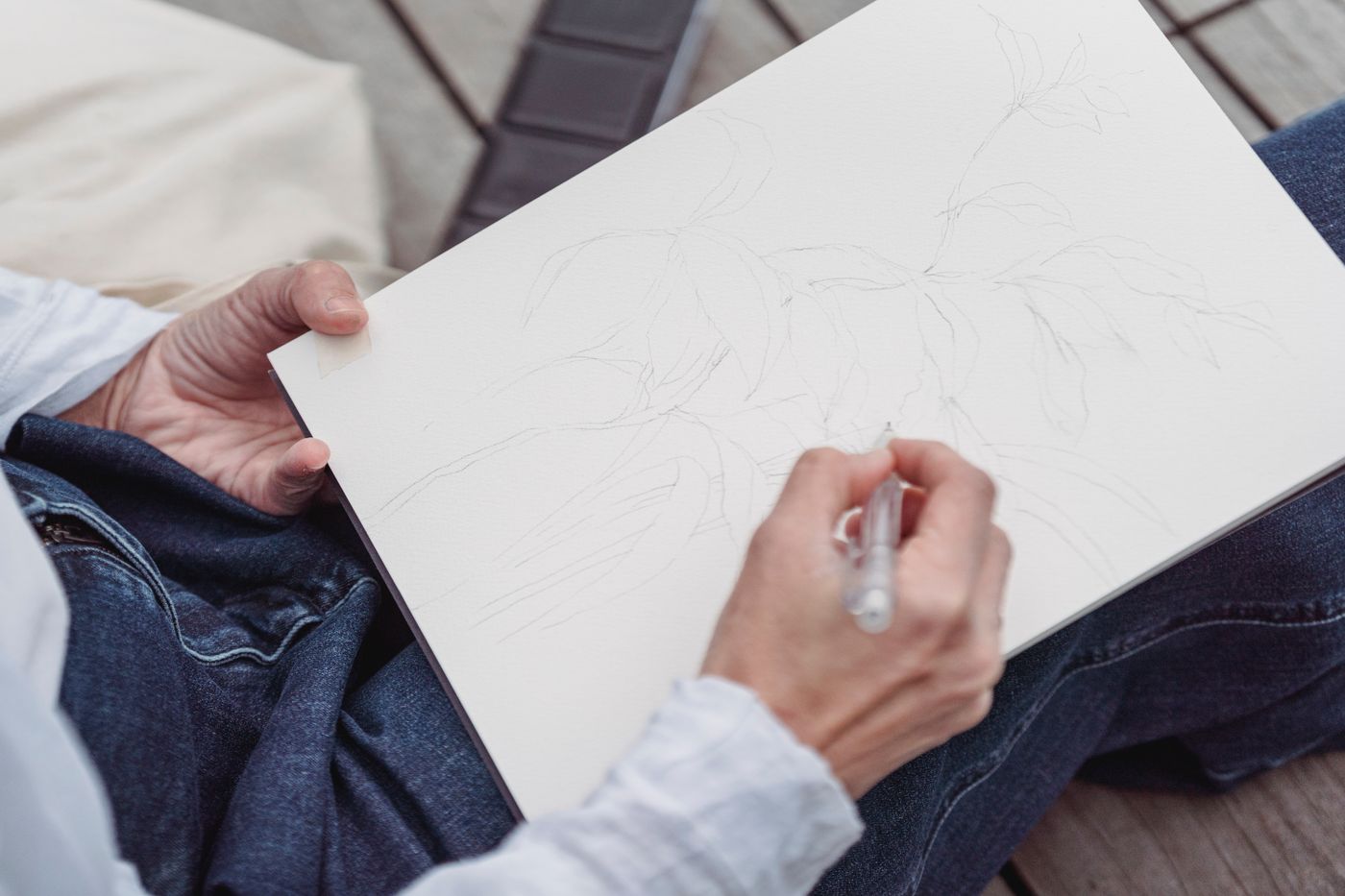
Choose a nearby park and somewhere you can sit without obstructing a path. A bench is more comfortable than a blanket when you want to draw a building or tree at eye level. Bring a notebook that fits on your lap, a pencil, an eraser and a clip to hold the pages. Leave the large collection of colours at home: choosing what to notice matters more than finding the perfect shade.
Imagine three spaces on your page. In the first, draw a tiny detail: the curve of an attached leaf, a screw in the bench or the outline of a watering can. Use the second for one complete shape. In the third, place that shape within its surroundings. Moving from a detail towards a scene is less daunting than immediately filling a large sheet with an entire landscape.
Three attempts, three questions
For the first attempt, concentrate on the outline. Look at the subject more often than at your paper, allowing the line to wobble. On the second attempt, notice empty spaces: the triangle between branches, the rectangle beneath a bench or the patch of sky above a roof. Comparing these spaces can be easier than deciding whether an object looks realistic.
For the third drawing, use three tones: untouched paper, pale grey and dark grey. The shaded underside of a tree can become one dark shape rather than hundreds of individual leaves. Draw an arrow showing the direction of the light. If the light changes, finish from your first observation instead of repeatedly moving every shadow.
What to keep
Write the place, date and one descriptive sentence. 'Branches lean towards the path' is more useful than 'bad drawing'. Keep unfinished attempts too. They record the detail that caught your attention and may suggest something to revisit on another walk.
When drawing with a friend, choose the same subject but wait until you finish before comparing pages. You will probably notice different things. Ask before drawing someone closely, avoid planting beds and keep access routes clear. You might take one reference photograph from your seat before leaving. It can explain an unfinished line later without turning the whole outing into a photography session.