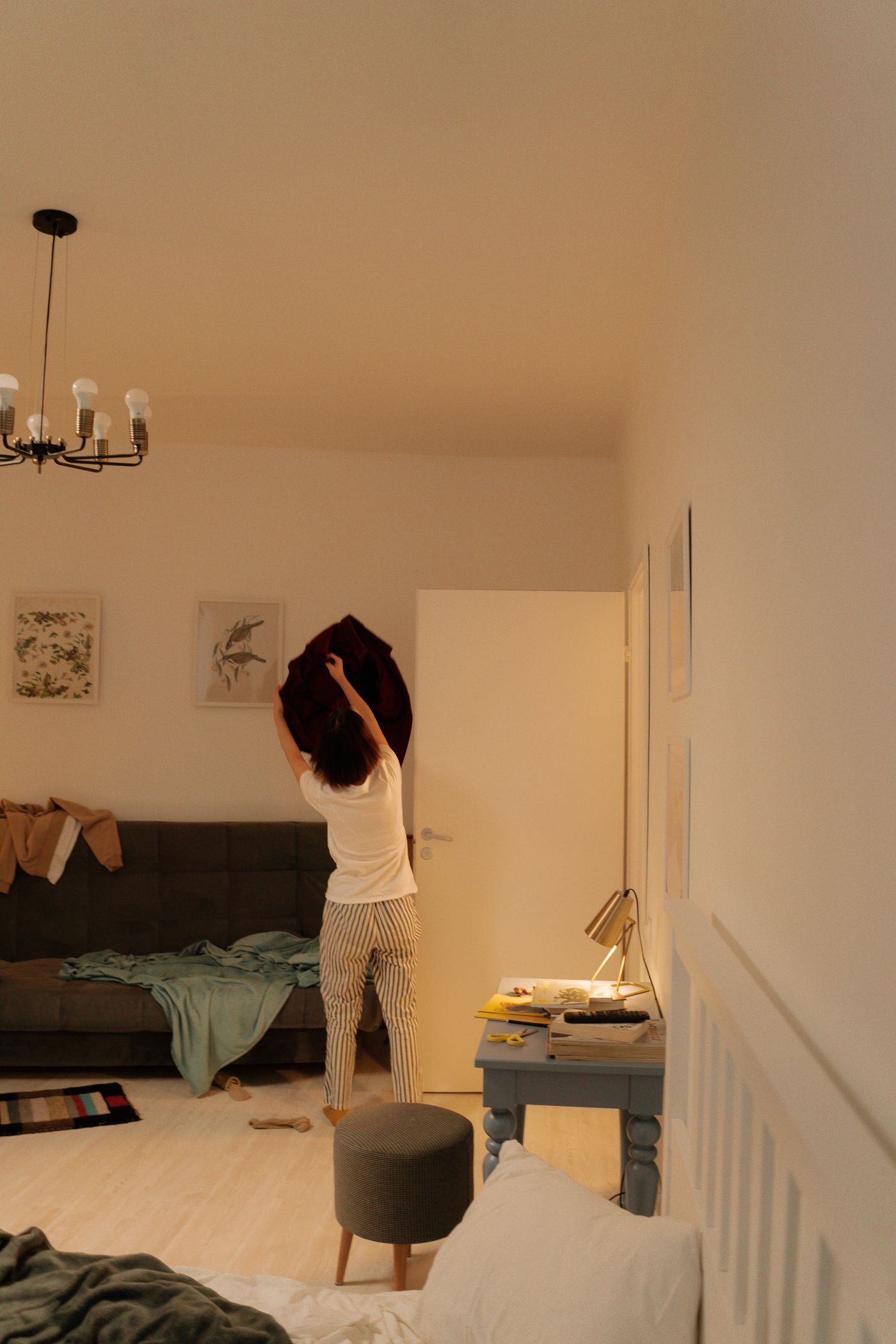
A song gives a small tidying session a beginning and an end. It does not promise to restore the whole home. Choose one area: a tabletop, a chair covered in belongings or the corner beside the door. Emptying an entire cupboard creates more work than the interval allows you to finish.
Select simple actions: return three objects to their places, gather papers or clear a seat. Avoid lengthy decisions about memories, important documents or other people's possessions. Those categories need another moment and sometimes their owner's agreement. Moving quickly is not a reason to discard something without understanding what it is.
Do not move the clutter elsewhere
Take a small basket for objects belonging in another room, but plan to distribute them before finishing. A filled and forgotten basket is simply a new pile. If something has no home, put it temporarily in a limited area to address later rather than inventing random storage.
Keep the volume low enough to remain aware of your surroundings and other people. Music is optional: a quiet timer or an existing short break can serve the same purpose. The useful feature is the boundary, not the soundtrack. Choose a signal that does not disturb someone working or resting nearby.
When it ends, stop and notice the difference. You may continue if you want, but that is not a condition of success. One usable chair is a concrete result. Do not turn this action into a punishment for a crowded room or a contest over how much another person achieves.
If the same surface fills every day, observe the returning objects. Perhaps bags lack a storage place or post needs a handling routine. The short session has then revealed an organisational problem to address separately. It does not replace thorough cleaning, detailed sorting or fair sharing of household work. It simply offers a limited starting point for something you can do now. Keep that modest purpose rather than expecting a song to solve every accumulation.