Look at the vase first
Start with the vase you will use. A narrow container holds a few stems, while a large one needs more volume to stop a bouquet looking lost. Estimate its height and take a photograph if you find proportions difficult to remember. Set a budget before leaving. One flower variety with a little foliage may suit your space better than several bunches that exceed your spending limit.
Check which day the market operates and plan to take the flowers home before doing other errands. Flowers left in a hot car or crushed beneath shopping rarely arrive in the same condition. A tall bag can support upright wrapping, but it does not replace the seller's advice about transporting delicate stems.
Compare without handling every bunch
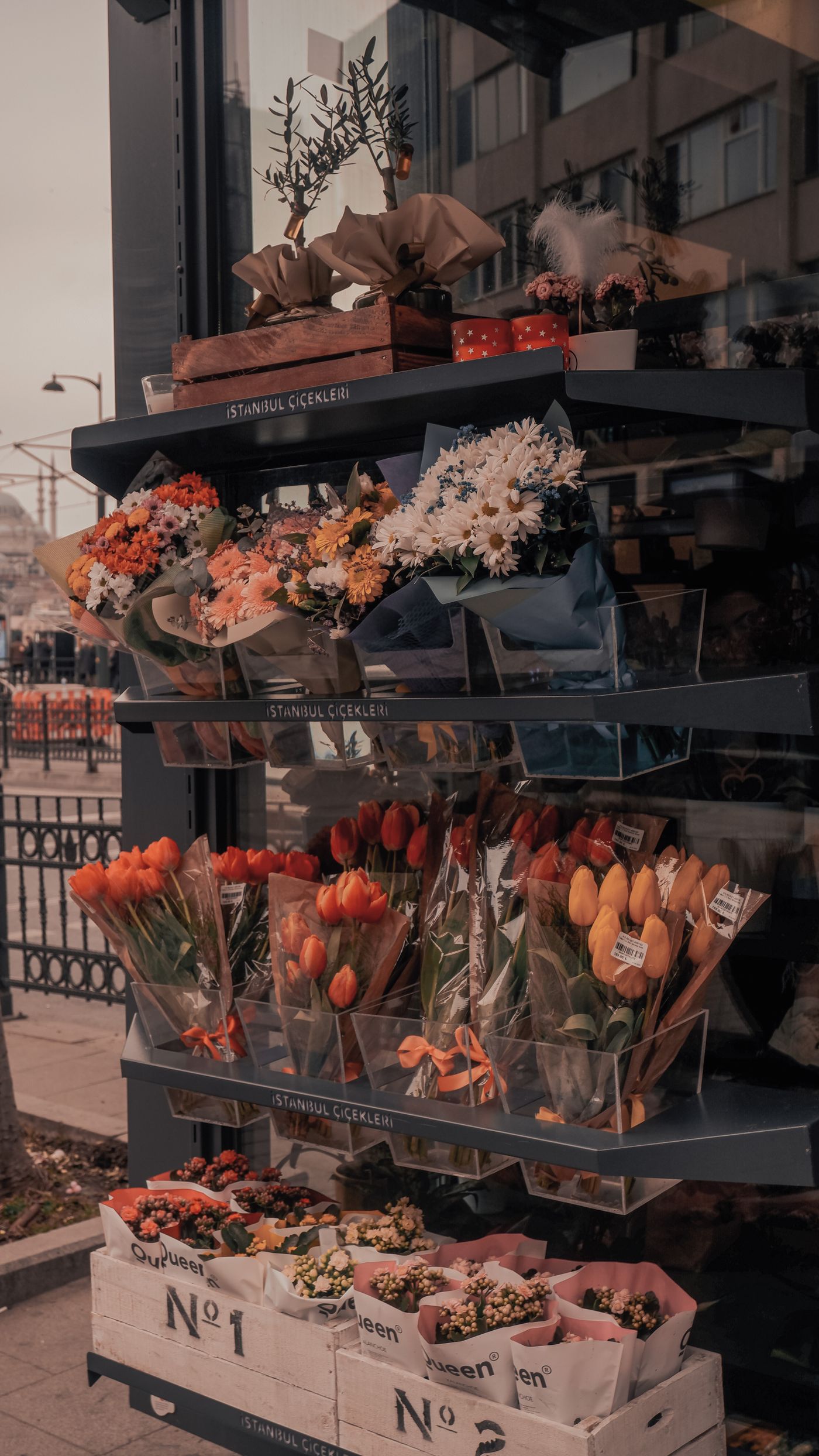
Look at visible leaves, stems and petals. Ask which flowers suit the temperature of your room and which will continue to open. A closed bloom is not automatically a better purchase: that depends on the species and its condition. Let the seller select stems or confirm that you may handle the bunches yourself.
If you live with an animal or young child, check before buying which plants are appropriate to keep at home. Some flowers and foliage can be hazardous when chewed. Do not buy an unidentified variety on the assumption that all cut flowers are harmless. Choosing a different bunch is easier than trying to make an unsuitable plant inaccessible later.
Arrange without overworking it
Clean the vase at home and follow care instructions for the flowers you bought. Remove leaves that would sit below the waterline, and recut stems with a clean tool when advised. Place the main stems first, then fill selected gaps with foliage. Turn the vase to check the arrangement from the angles where you will actually see it.
Keep the bouquet away from heat and from places where it could be knocked over. Check the water regularly and remove deteriorating material. Photographing the finished arrangement beside the empty packaging can help you remember how many stems worked. That record of proportions may be more useful on your next visit than a list of flower names alone.
Divide flowers between smaller vases
If a bunch is too large for its intended position, try two or three stable small vessels instead of forcing every stem into one. Check they are clean and suitable for holding water. Put one main stem in each, then a supporting piece, keeping the height low enough to prevent tipping. Containers need not match, but their openings should support stems without crushing them.
Dividing also lets you retain sound material when one part of a bouquet deteriorates. Cut only what is needed with a clean tool and follow the species' requirements. Avoid tiny vases in busy routes or on unstable surfaces. Group them on a tray if that helps movement, while keeping the surface beneath them dry. Look at the arrangement from where it will normally be seen rather than only from directly above.