Find a seat before a backdrop
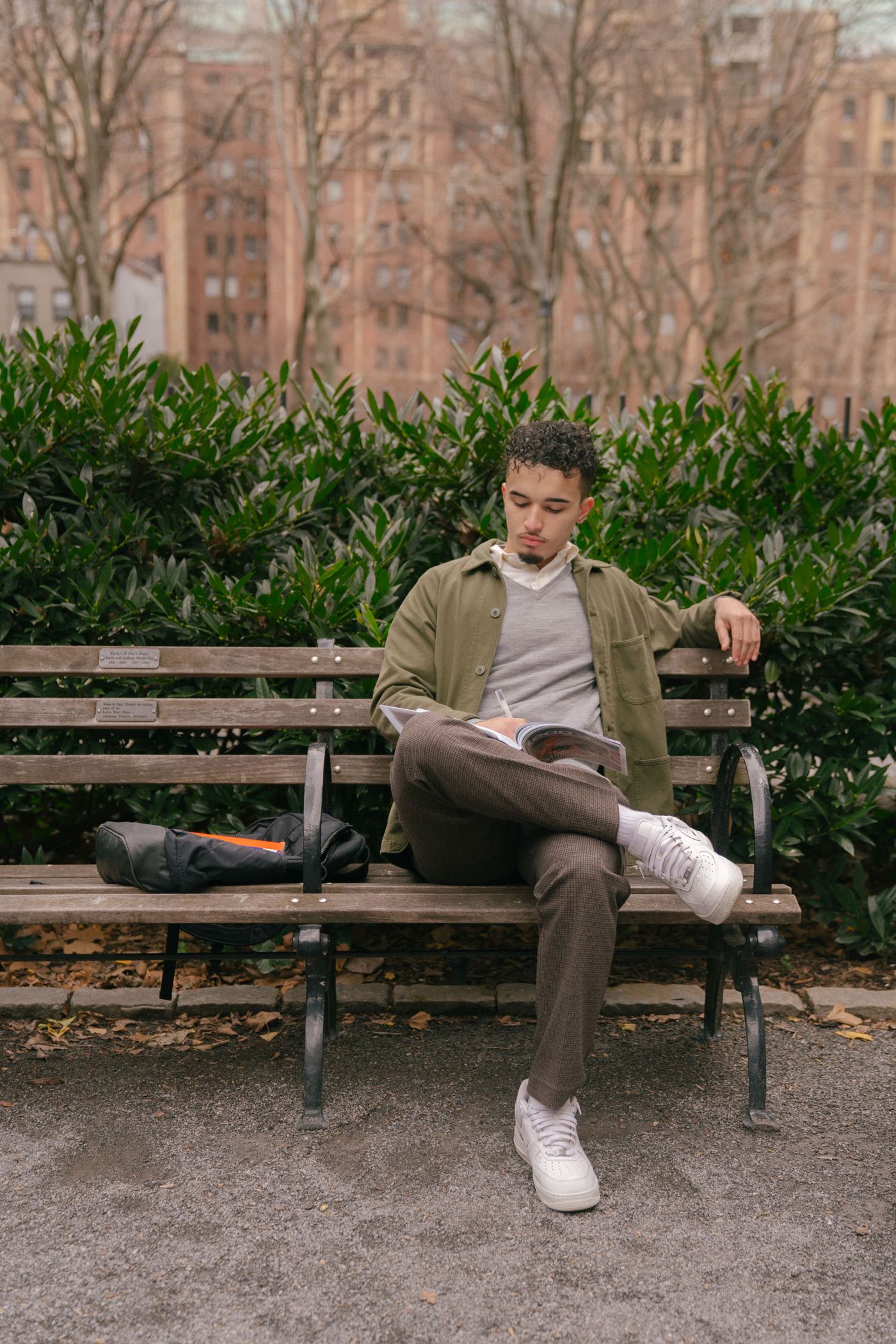
The most photogenic bench is not necessarily the best place to read. Look for a dry seat, back support if needed and a position that does not make you squint. Some shade may help, but consider wind and passing traffic too. Keep access clear and do not occupy several seats with your bag.
Choose a book that is easy to hold. A collection of short pieces, a novel already started or a few printed pages may work better than a heavy volume. Put a bookmark at the right place before leaving and remember reading glasses if you use them. You should be able to begin without reorganising everything in your bag.
Give the reading some space
Allow an approximate amount of time rather than requiring a certain number of pages. You may read less outside because of sounds and movement; this does not need correcting. When attention wanders, look around for a moment and return to the sentence. Avoid repeatedly rereading a paragraph simply to prove that you can concentrate.
If the surroundings are too distracting, move to another bench or choose something more fragmented next time. Reading a single poem slowly can fill an outdoor break. The format should suit the moment rather than demonstrate an ability to read under every possible condition. Notice whether a particular time of day makes the place quieter or more comfortable.
Make leaving easy
Keep your phone and belongings close without spreading them around. Check the forecast and protect the book if rain is possible. Carry a closed water bottle separately from paper to reduce accidental spills. Head home if you become uncomfortable rather than staying until an arbitrary finishing time.
When you close the book, record a word or question in a notebook if you want to. There is no obligation to photograph the scene or summarise the chapter. Check that you have not left glasses, a bookmark or packaging on the bench. You might return to the same place, or discover that another seat provides better light and fewer interruptions.