Provide a limited but genuine choice
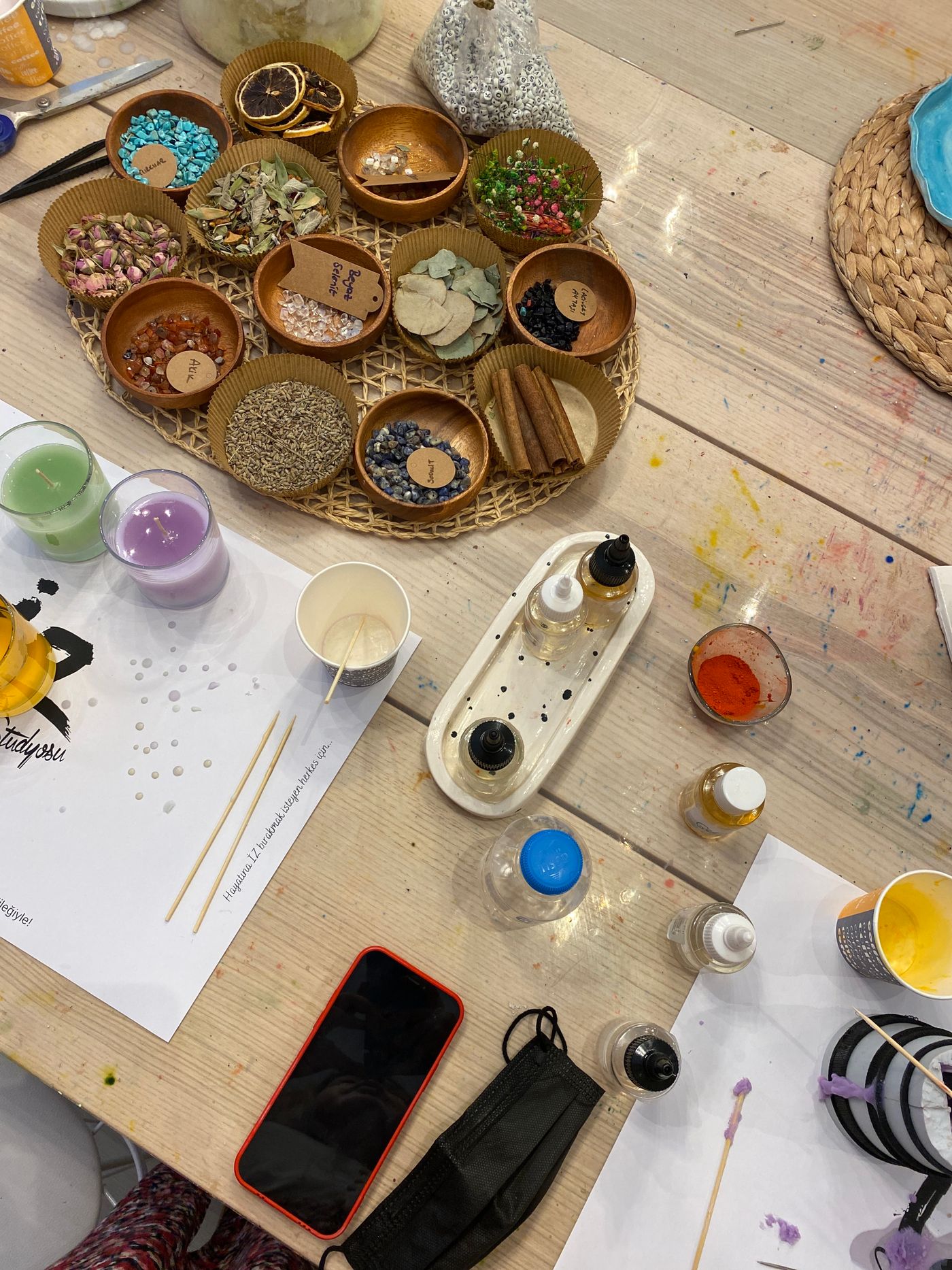
Prepare three groups of materials, such as paper, pencils and fabric scraps. Choose tools suitable for participants' ages and abilities, with appropriate supervision. Covering the table with your entire collection may overwhelm rather than help. Use low, visible containers and leave a clear working area at each place.
Explain what can be used and what needs to remain on the table. Provide one box for useful leftovers and another for rubbish. Protect the surface and follow instructions if using glue. Avoid small parts where young children may put them in their mouths. Keep materials intended only for adults separate rather than expecting every participant to remember an invisible boundary.
Suggest a beginning, not a final result
Offer possibilities such as a card, a hanging shape or a picture using three colours. Leave room for another idea using the available materials. Avoid presenting a highly polished example as something to reproduce, which can make other versions appear inadequate before anyone starts.
Adults can make their own work instead of correcting every movement. Ask before helping and describe what you notice: 'You have layered two papers' leaves more room than 'Blue would look prettier'. Someone may enjoy experimenting without producing an object they want to keep. Exploration does not need to end in a displayable result.
Include clearing up in the plan
Announce the end early enough for people to finish a stage. Provide a flat place for work that needs drying, with names on separate slips if necessary. Anyone taking damp work home needs suitable support rather than a bag that will fold it.
Divide clearing into straightforward tasks: close pens, sort paper or clean one area. Do not retain every scrap simply because it might be useful one day. A limited, visible supply makes the next session easier. Photograph work only with its maker's agreement, without turning online sharing into the purpose of the activity.
Help when an idea stalls
When someone says they have no idea, ask whether they want a suggestion or simply more time. Offer a very small starting action: tear three strips, draw one line across the sheet or choose two textures. This gives them something to do without deciding the outcome. Avoid taking their work away to demonstrate at length how you would make it.
If the obstacle is physical, change the tool rather than insisting: larger paper, an easier-to-hold pencil or already-cut shapes may help. Make these options available without conspicuously reserving them for one person. Someone who prefers watching can still have a place at the table. Being present without making an object can also be part of the shared afternoon, and does not need to be corrected by assigning another task.