Clear a suitable testing space
Choose an indoor area without fragile objects or frequent passing traffic. Launch in one direction, never towards a person or animal. Ordinary paper is enough; avoid reinforced points, staples and added weights. Help young children with folding and leave cutting tools out of the activity when they are unnecessary.
Mark a starting line with something removable that will not damage the floor. Agree on a signal for collecting planes so nobody crosses while another person launches. These simple rules keep a shared experiment from becoming a series of people running in different directions. Clear space matters more than achieving the longest possible flight.
Fold a simple model
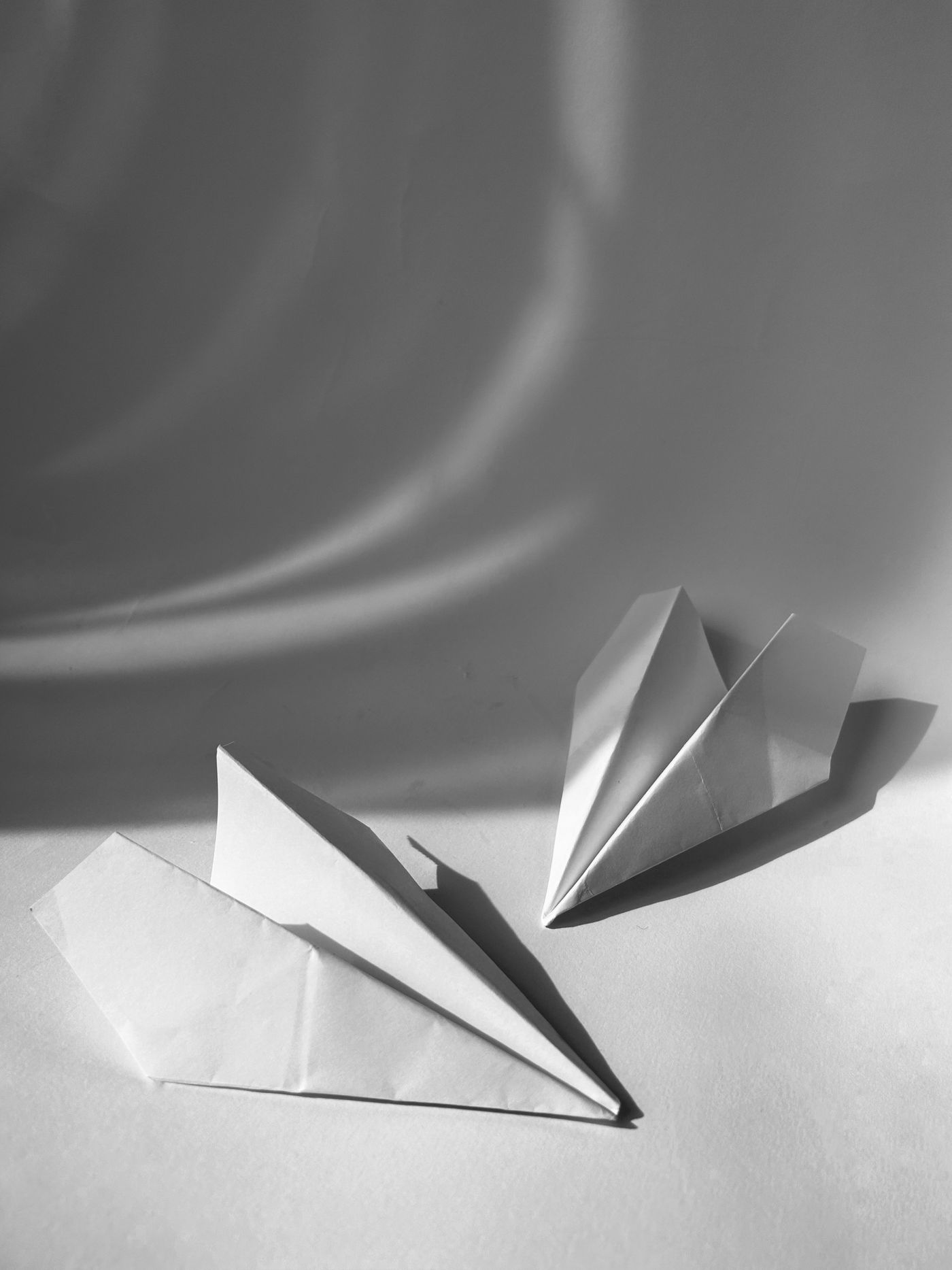
Fold the sheet lengthways in half, then reopen it to leave a centre crease. Bring the two upper corners towards that line. Fold the sloping edges towards the centre again to lengthen the point, then close the plane along the original crease. Fold each wing down symmetrically, leaving a central section to hold.
Press creases with a finger rather than a sharp tool. Compare the wings before the first test, because a large difference can make the plane turn. Decorate lightly to identify each model, avoiding paint that soaks the paper. Write a small letter underneath if several planes otherwise look alike.
Test without choosing a champion
Launch gently and roughly horizontally, then observe whether the plane dives, turns or glides. Change one detail, such as wing angle, and try again from the same line. Altering everything at once makes it difficult to understand what caused a difference.
Record the result in words or a small drawing without necessarily measuring every distance. A turning plane can become an interesting subject rather than a failure. Collect all paper afterwards and keep one model with a note of its most useful adjustment. Rebuild it another day to see whether the same fold produces similar behaviour.
Make comparisons understandable
To compare two planes, use the same starting point and make several gentle launches with each. One flight may be affected by the hand movement or a draught. Record the tendency rather than only the best result. Three symbols can represent straight, turning and diving, allowing you to see whether an adjustment changes the most frequent behaviour.
If participants have different strength or ease of throwing, do not use distance as a direct measure of folding quality. One person can launch several models, or everyone can compare only their own versions. Keep an unchanged model beside the experimental one as a reference for the original wing position. Label altered versions with a small note, so a surprising flight can be connected to the change rather than remembered only as luck.