Prepare without choosing recipients
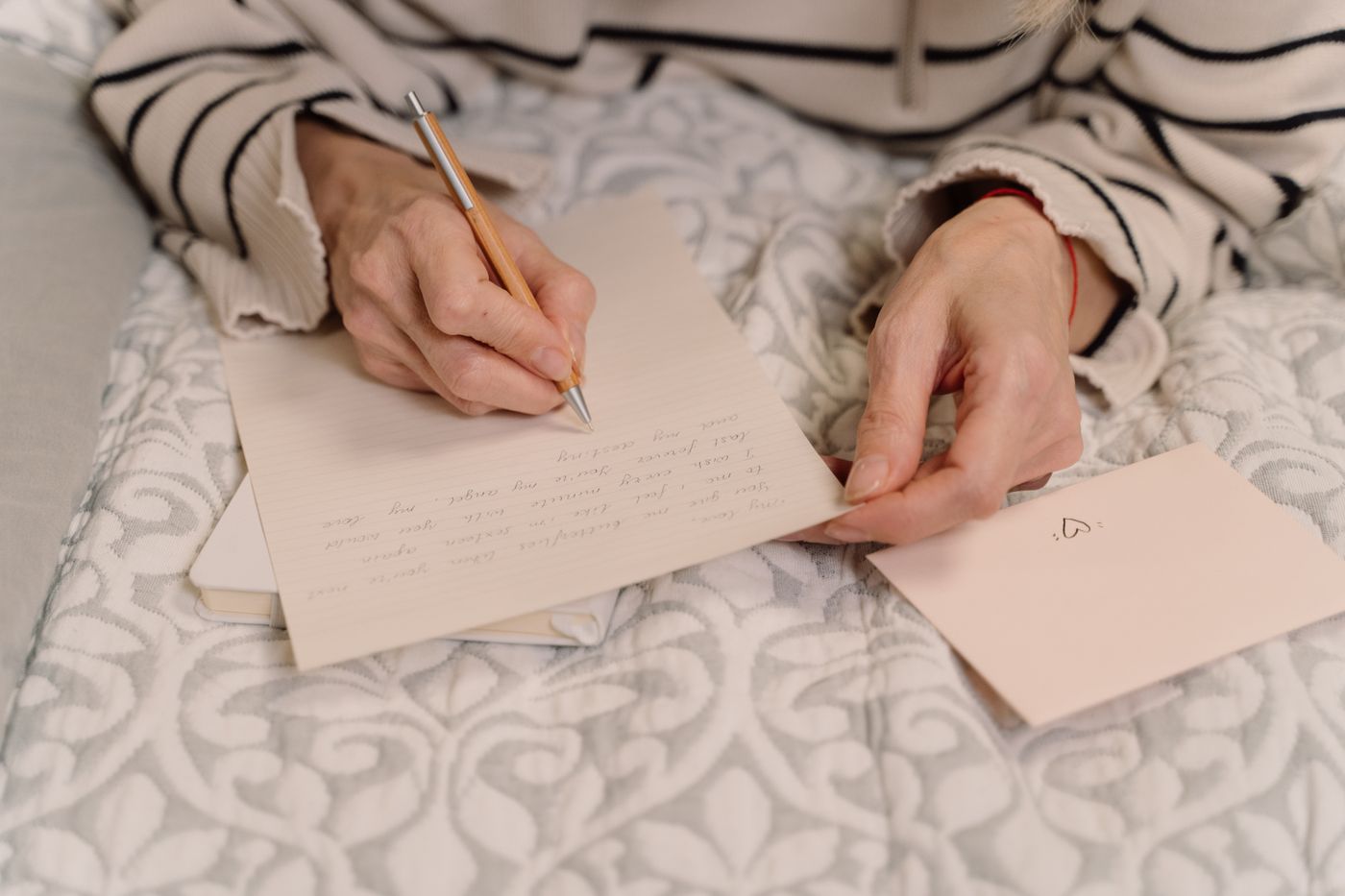
Provide paper, envelopes, a few pens and a reminder to check postal requirements. Participants decide whom to write to and may choose not to send the result. A letter begun to clarify an idea does not necessarily need to arrive in a letterbox.
Space seats far enough apart for people to write without someone reading over their shoulder. Sharing a table does not make the texts public. Ask before offering corrections or advice, and do not photograph open pages to document the activity. Keep spare paper available so someone can restart without explaining why the first attempt no longer suits them.
Find a first sentence
For anyone unsure how to begin, offer three possible openings: describe a recent scene, thank someone for a specific gesture or ask a question postponed for a while. Avoid complete templates that replace the writer's own voice. One plain first sentence may be enough to start the rest.
Allow quiet periods and a separate place for conversation. Faster writers can address envelopes or draw a small card while others continue. Do not set a page target. A short, readable letter is not less valid than a long account, and nobody needs to disclose the subject to prove they are participating.
Close the letter deliberately
Before sealing, check names, dates and what you genuinely want to share. If the subject is sensitive, keep the draft for a day before deciding to send it. A sociable atmosphere should not rush someone into a significant personal action.
Confirm the address, format and postage with the relevant postal service. If one participant will post the letters, establish clearly which are ready and which must remain with their writers. Store or dispose of drafts privately. Finish by discussing the experience of writing if you want, without reading messages aloud or asking what every recipient means in someone else's life.