Invite with useful details
Suggest a precise meeting point, an approximate duration and the type of ground. 'A forty-minute loop on a level path' is easier to assess than 'a little walk'. Ask whether the route suits and adapt it to individual needs. Meeting for a walk is not a disguised invitation to maintain your usual pace.
Plan a straightforward return and a way to shorten the route. Check weather and access conditions, then explain what will happen if it rains. Changing to a short sheltered walk or postponing is better than leaving people to guess whether the meeting is still happening. Make sure the start is somewhere everyone can find comfortably.
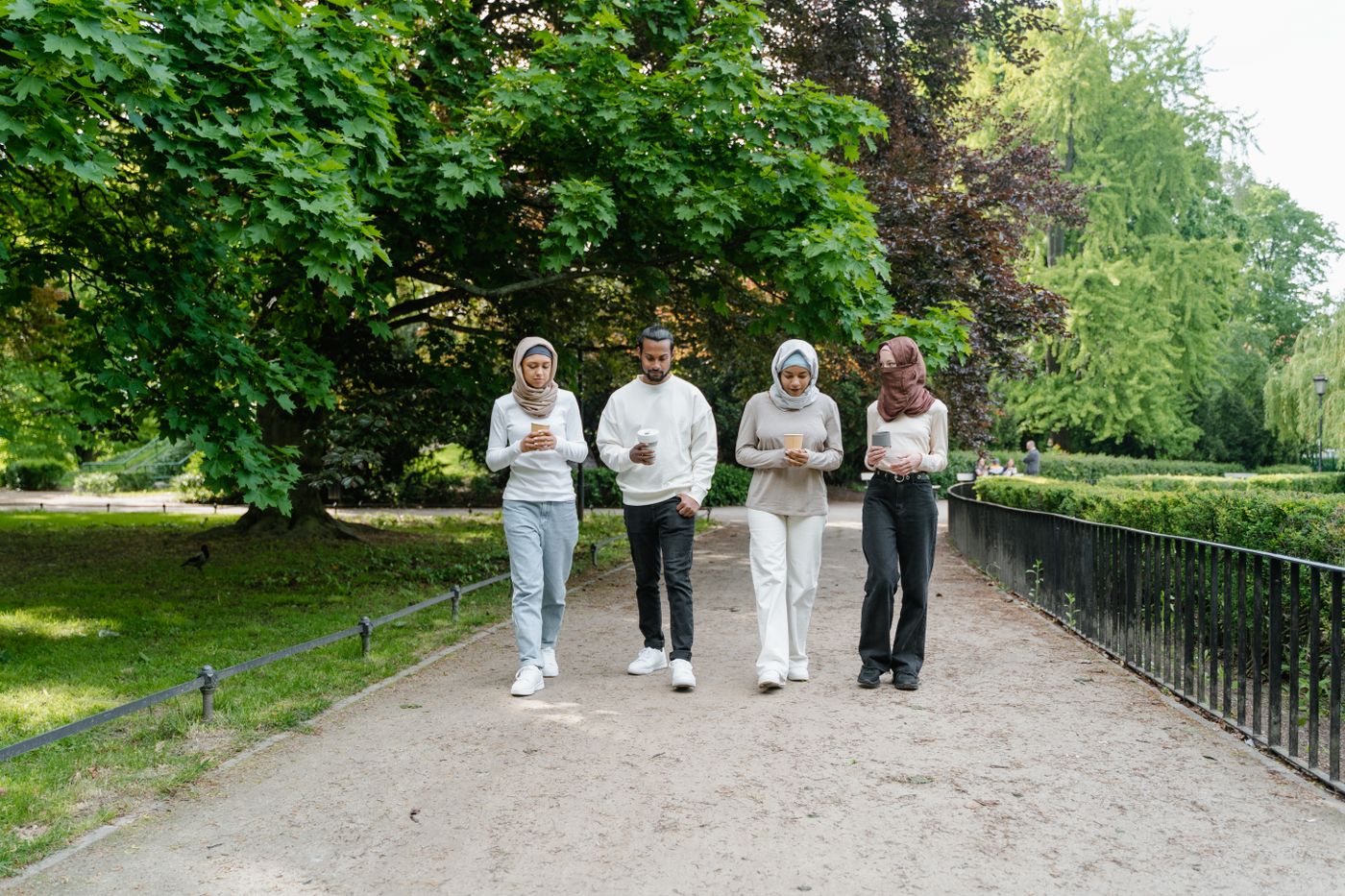
Walk alongside each other where possible
Choose sections wide enough to talk without obstructing other users. Walk in single file on narrow parts and resume the conversation afterwards. In a larger group, change positions rather than always leaving the same person at the back. Stops also give everyone a chance to return to a shared conversation.
Let the pace slow when a subject needs attention. There is no need to fill every silence or turn the outing into a session of advice. Ask whether the other person wants to be heard or to consider solutions instead of assuming an immediate answer is required. Walking together can accommodate quiet stretches as well as animated discussion.
Finish when you said you would
Respect the announced finishing time, especially when someone has another commitment. Suggest extending only at a point where the other person can easily leave. An extra stop should not become compulsory because you remain far from the starting point.
A brief message afterwards can thank them or suggest another date. Keep confidences from the walk private. If the route worked, retain it as an easy option without requiring a new setting every time. Repeating a familiar route can free attention for the person rather than the logistics.